ADD

Tuesday, 29 November 2016

Variations on Self-Care

When I saw the advertisement for a "soup subscription," I thought Yes! Soup. This is the right time of year for that. After the elections, a local poet-friend sent a note to all in which our need to gather, vex, and rally was entirely summed up in the statement: "I want to make soup for you." We gathered together at her place on a Friday night, drinking wine and eating eggplant soup; and when the eggplant soup was gone, she made lentils. 

So I signed up--happy to support a local businessNot until yesterday did I realize this is a soup cleanse. Twenty containers, cued sequentially right down to time of day. 


Not gonna happen. But the good new is, soup! Fresh, handmade, vegan, meticulously labeled. Well, except for that one container...which by process of elimination contains either 1) Brazilian Black Bean, or 2) an elaborate assassination attempt. 

Option #2 would be a waste of the side of rice I cooked in shallots and garlic.

Writers are a vocal group on social media, and I've seen many pronouncements in which radio silence is equated to "self-care." On one hand, you have to get the oxygen mask on yourself before you can help those around you. On the other hand, taking care of yourself can't be your excuse to opt out of painful dialogues. You're doing nothing to complicate your privilege if you think of worrying as something you can put aside for a day, versus having it be an involuntary part of your existence. A lot of people are eyeballing panicky white liberals and thinking, Oh, now you're upset?

Soup. Sleep. A vase of $5 tulips that stand ramrod straight one day, and swerve like drunkards the next. 43-minute workouts whenever I can (which is exactly the length of one Chopped episode.) Petting my cat in the morning, when she curls up beside my pillow and stares out the window. The cranes are erecting a building in the adjacent lot, one beam at a time. They're the strangest birds she has ever seen. 

I read the manuscript for a neighbor's brilliant nonfiction book, which will be published in 2017. I renewed my Politics & Prose membership. I subscribed for another year to three different literary journals. In defiance of all practical logistics, I will be hosting thirty women writers for lunch at the Arts Club of Washington this Friday. I worked for few days straight on a soon-to-be-revealed creative project in celebration of Count the Waves' paperback release on December 13.

I made a few donations. I made a few phone calls. But there is so much more to do. I can do so much more. All of these gestures of self-care are important, but the truth is that I feel strongest--no, I am strongest--when acting out of concern for others rather than myself. 

I've never been very good at half-measures. I'm a perfectionist, drawn to dramatic outcomes and absolutes. If I have three hours' worth of work to do, I'll wait until I've got three hours free. That means letting a lot of free hours go to waste in the meantime, rather than logically doing an hour here and an hour there until the work is done. 

But that's not how advocacy gains a foothold. You show up, even when no one is there to witness it. You chip away. You pester. You celebrate the two steps forward even as you're taking one step back. You don't aim to be perfect, you aim to be present. 

Much of the past few years, for me, has been about articulating the particular political and social concerns I have in the world. (Not that "liberty and justice for all" isn't a good start, but you have to get specific.) If I want to look back on this life with any kind of pride, I have to shelve my distaste for half-measures for the privilege it is, and center advocacy part of my daily practice. 

At the very least, I have the time to spare that it would have taken to make soup. 

Pricking by Jessica Cuello


Jessica Cuello 
Pricking 

Tiger Bark Press
http://www.tigerbarkpress.com/


By the numbers 

ISBN: 978-0-997-63051-0 
Publication: 2016 
Total pages: 74
Number of poems: 69


__________

Pricking is Jessica Cuello's 
first full-length manuscript. Her second collection, Hunt, was the winner of The 2016 Washington Prize from The Word Works and will appear in March 2017. She is also the author of the chapbooks My Father’s Bargain (Finishing Line Press 2015), By Fire (Hyacinth Girl Press 2013), and Curie (Kattywompus Press 2011). She was the winner of The 2013 New Letters Poetry Prize and the recipient of the 2014 Decker Award from Hollins University for outstanding secondary teaching. Jessica was selected as a Juried Fellow by the Saltonstall Foundation.

I interviewed Jessica on my personal blog last year about her chapbook My Father's Bargain. You can read that interview here.

—Nancy Chen Long

__________

Jessica Cuello's first book Pricking is titled after the act of pricking, a method of witch-hunting in the Middle Ages. Suspects, usually women, were forced to strip naked, while witch-hunters, usually men, pricked the marks on their body—birthmarks, moles, pimples. If the hunter found a spot that didn't bleed, the suspect was declared a witch. Using special needles, these often-times paid hunters would prick and prick until they found a spot that didn’t bleed and would identify that mark as the devil’s mark. The title of the book is indicative of what I sense to be the primary impulse of the book: Woman’s struggle for autonomy over her body, the connection between bodily integrity and empowerment.

The book as a whole is comprised of compressed and spare persona poems that place us smack in the Middle Ages. We find ourselves caught up in the lives of three French women thought to be heretical: Esclarmonde de Foix, Joan of Arc, and a midwife. Through the use of imagination and historical fact, Cuello fleshes out a captivating narrative that brings each woman to life.

There are three sections to the book, one for each woman. The first is in the voice of Esclarmonde de Foix, a prominent leader in Cathar Church in the thirteenth century who was accused of heresy by the Roman Catholic Church. The origins of the Inquisition are in Rome’s effort to quash the heretical Cathers, a religious group in the south of France whose practices were believed to contain elements of witchcraft. Esclarmonde had six children and is thought to have turned to Catharism after the death of her husband.

This first section opens with three poems that set the stage for Esclarmonde's rise as a leader of the Cathars. The first poem "The Births: 1186" is about Esclarmonde giving birth to her children and introduces birth as one of the themes of the book. This first poem also signals Esclarmonde's turn towards religion after her sixth child: "After my sixth I locked the door. / ... / The natural world is hard and dirt. / I want to scrape it off my skin." The second and third poems center around her mystical conversion experiences. In "Conversion: May 1204," Esclarmonde begins to hear voices, a whisper that has "no decision it," faint voices that she discovers can't leave, because "they were in the body." While there was indecision in the first conversion poem, the second conversion poem, "Conversion: June 1204," is resolute: "God reversed me. See my legs / jaunt up the hill. / The hot wind is His mouth / around me."

In the remainder of this first section, Cuello's poems propel us forward with Esclarmonde through a Cathar-Catholic debate, the atrocities of the Cathar Wars (aka the Albigensian Crusade), and her life as a fugitive, a time during which she was rarely seen. Throughout this first section, the tone remains even and matter-of-fact in the face of violence, for example "The Foot of Montségur," which depicts the remaining remnant of the Cathars corralled and then burned alive, "All night, sun sets on the town. / Easily they fit us in the circle. / We are the last of us." This section closes with a funeral lament voiced by Esclarmonde for her brother Raymond Roger, a non-Cathar who fought to oppose the crusades:

Planh For My Brother, Raymond Roger, Count of Foix

While I was finding room
to hide refugees and heal the sick
you were present.
We never lacked
for things to do and moved
in the self-importance of our birth.
Once, pinning up my reddish hair
I paused and thought of your boyish head.
We were two foxes
from the last litter of our kind.
Our tongues were South.
When you were before the church
half-dressed and shackled,
I couldn’t look.
The world did not seem
long enough in history.
No, it was done.
Our land. Our tongue.
At the end you said your only wish was
that you’d killed more of them.

The second section of Pricking is set in 15th-century France. Most the poems are in the voice of Joan of Arc, another woman who heard voices and had visions. It's a shorter section comprised of ten poems. Around the time that Joan of Arc lived, there were prophecies that France would be saved by a virgin from Lorraine. The first poem, "Jeanne D’Arc Thinks of Her Virginity" hints at the importance of virginity to her ("a virgin / can prophesy for God"), possibly in light of the prophecies. The poem also suggests that once she becomes a mother, she would (or could) no longer be an instrument of God ("but once / a mother, / nothing else.")

I read the first poem of this section to be at a time when Joan of Arc is still with her mother and father. Earlier in Joan's life, her father had a dream that Joan would go off to war. It was a dream that made him frightened for her. This first poem seems to take place soon after Joan hears her mother say that her father told her brothers he would want Joan drowned if she were to leave for war ("I pretend not to know / that he told my brothers // to drown me.") With respect to timing, the remaining poems in this second section seem to take place during the last two years of her life, that is, the year she spent in prison after her capture in 1430 and the subsequent year when she was on trial for heresy. For example, the second poem "70 Feet Down" is likely about one of her attempted escapes from a tower at Beaurevoir Castle where she was first imprisoned. ("Can you be dropped from the lips of the Lord? / I leapt. The ledge / less certain than the bracing cold.")

The poem "In My Cell" appears to be set during a time when the interrogations for Joan of Arc's trial of witchcraft and heresy were moved to her prison cell. In this poem, we see the return to the of idea of mother in which Joan of Arc is mother to herself:

.... shackled to the wall at night
I dream in silence of Lorraine.

The fields are wide. I hold
my left hand in

my right and kiss
my fingers like a mother.
This reference to being a mother bridges back to the opening poem of this section and suggests that Joan is realizing the end of her prophesy, of her usefulness to God. The idea of mother continues in this section's final poem "Isabelle D’Arc Thinks of Jeanne," which is in the voice of Joan of Arc's mother. Coming as it does after a poem titled "Executioner," we know that Joan of Arc is now dead. It strengthens the poignancy of the poem, a mother bearing the grief of a lost child, as we listen to Isabelle talk to her daughter: "I hear your humming while I work / as if you left it in the timbers of our home." The idea of the child being heard and held within the timbers (walls) of a home presages a metaphor of womb-as-a-room, a metaphor that is introduced in the next section.

The third and final section of the book is set in 1580 during the Reformation and associated witch trials. The poems are told in the voice of a midwife. Unlike the second section, which begins with the speaker not wanting to be a mother, this section opens up stressing the importance of motherhood and birth. In the opening poem, "Midwife," the speaker, who is assisting in a birth, uses room as a metaphor for the womb: "All of us began in a room." Speaking of the woman giving birth, the midwife asks "What room is she?" and answers her own question, an answer which highlights the importance of bearing children during this time period: "Walls that go / when they hold no one."

Even though the first handful of poems in this section are about birth and midwifery, the reader will find herself immersed in death. In this arc of the narrative, the speaker recalls one of her own children, a son who died after nine days ("Nine days. The court / remembers. Even my goat / has babies longer", from the poem "Baby Boy.") In addition, one, possible two of the babies whose birth she attends die ("Sick Infant," "Baptism.") In addition, the speaker becomes a widow ("Widowed Young.")

The story turns once the speaker is widowed: She stands accused of witchcraft, likely due to the death of the babies. At the time of the Reformation, some people drew a connection between midwifery and witchcraft. Midwives were not infrequently prosecuted in church courts for providing charms either to assist the mother in childbirth/ pregnancy or to encourage conception. In the poem "Evidence Before the Court" (see the third poem in the link), the midwife denies that she crafted an aigullette "to take a man away." An aigullette is, among other things, a knotted loop of thread used by midwives and/or witches to cast a spell, either for bareness in the case of women, or impotence in the case of men. Through the skillful use of anaphora ("I never / never" repeated twice), the reader is left wondering if perhaps the speaker has indeed used the aiguillette. In the poem, the allusion to Eve, Original Sin, and the biblical garden ("an apple in my / bucket smelling / of the devil") foregrounds the belief at the time of the inherent evilness of women and the blame of women by the Judeo-Christian church for all ills that beset humanity.

After the accusation of witchcraft, the midwife is subjected to a number of tests: "Lack of Tears (see the fourth poem at the link)," "Pricking Test," "Water Test," and "Fire Test." The tests were nothing less than legalized abuse, sexual violence, and murder. Unfortunately, the midwife meets the fate of many who stood likewise accused—she is found guilty of being a witch ("They found the marks," from the poem "Limbo.") The midwife speaks from beyond the grave in this final poem in an understated tone, with what I read as relief: "How familiar: I won’t belong / to the face that made me. / I won’t belong by living." One leaves this last section feeling the full potency of being accused of, and/or prosecuted for, witchcraft, how potent it was as a tool of intimidation, how effective—almost foolproof—it surely must have been in controlling women and their bodies.

Pricking is a successful first book. Its themes carry the reader through each woman's life and time in history, beginning and ending with birth, mother, and midwifery. The themes of body and agency integrate the poems to form a satisfying whole, from the first section, in which Esclarmonde, in "Material," tells us:

My God had no argument,
he panted through my body
until the body was inward
like the caves: cool, silent.
Until it was as the cliffs...
...until the final poem, "Limbo," in which the midwife "waits with the unsaved babies," her soul in limbo, body-less like the others there, until they are reunited with their bodies at the Resurrection. Cuello's consistent use of an understated tone and her finely-chiseled, spare language serve the poems well by standing in contrast to the violence witnessed in the poems. Cuello's poems bring history to life.

__________

Apprentice
- by Jessica Cuello

Soon she would have learned
to strip the membrane
near the womb.
One finger to set
the labor on.

Then she would have learned
to turn the baby
in the mother’s water.
A sailing planet in her hands.

"Apprentice" and "Planh For My Brother, Raymond Roger, Count of Foix" © Jessica Cuello Pricking (Tiger Bark Press, 2016)


Nancy Chen Long is the author of Light Into Bodies (University of Tampa Press, 2017), winner of the 2016 Tampa Review Prize for Poetry and Clouds as Inkblots for the War Prone (Red Bird Chapbooks, 2013.) You’ll find her recent and forthcoming work in Prairie Schooner, The Briar Cliff ReviewAlaska Quarterly Review, Pleiades, Superstition Review, Bat City Review, and elsewhere. She received a BS in Electrical Engineering Technology and an MBA, worked as an electrical engineer, software consultant, and project manager, and more recently earned her MFA. As a volunteer for the Writers Guild at Bloomington, she coordinates a reading series and works with other poets to offer poetry workshops. nancychenlong.com

Saturday, 26 November 2016

Langston Hughes

Langston Hughes believed in humanity and he had hope for a world in which people could sanely and with understanding live together. 

Let America Be America Again
Langston Hughes, 1902 - 1967


Let America be America again.
Let it be the dream it used to be.
Let it be the pioneer on the plain
Seeking a home where he himself is free.

(America never was America to me.)

Let America be the dream the dreamers dreamed—
Let it be that great strong land of love
Where never kings connive nor tyrants scheme
That any man be crushed by one above.

(It never was America to me.)

O, let my land be a land where Liberty
Is crowned with no false patriotic wreath,
But opportunity is real, and life is free,
Equality is in the air we breathe.

(There’s never been equality for me,
Nor freedom in this “homeland of the free.”)

Say, who are you that mumbles in the dark? 
And who are you that draws your veil across the stars?

I am the poor white, fooled and pushed apart,
I am the Negro bearing slavery’s scars.
I am the red man driven from the land,
I am the immigrant clutching the hope I seek—
And finding only the same old stupid plan
Of dog eat dog, of mighty crush the weak.

I am the young man, full of strength and hope,
Tangled in that ancient endless chain
Of profit, power, gain, of grab the land!
Of grab the gold! Of grab the ways of satisfying need!
Of work the men! Of take the pay!
Of owning everything for one’s own greed!

I am the farmer, bondsman to the soil.
I am the worker sold to the machine.
I am the Negro, servant to you all.
I am the people, humble, hungry, mean—
Hungry yet today despite the dream.
Beaten yet today—O, Pioneers!
I am the man who never got ahead,
The poorest worker bartered through the years.

Yet I’m the one who dreamt our basic dream
In the Old World while still a serf of kings,
Who dreamt a dream so strong, so brave, so true,
That even yet its mighty daring sings
In every brick and stone, in every furrow turned
That’s made America the land it has become.
O, I’m the man who sailed those early seas
In search of what I meant to be my home—
For I’m the one who left dark Ireland’s shore,
And Poland’s plain, and England’s grassy lea,
And torn from Black Africa’s strand I came
To build a “homeland of the free.”

The free?

Who said the free?  Not me?
Surely not me?  The millions on relief today?
The millions shot down when we strike?
The millions who have nothing for our pay?
For all the dreams we’ve dreamed
And all the songs we’ve sung
And all the hopes we’ve held
And all the flags we’ve hung,
The millions who have nothing for our pay—
Except the dream that’s almost dead today.

O, let America be America again—
The land that never has been yet—
And yet must be—the land where every man is free.
The land that’s mine—the poor man’s, Indian’s, Negro’s, ME—
Who made America,
Whose sweat and blood, whose faith and pain,
Whose hand at the foundry, whose plow in the rain,
Must bring back our mighty dream again.

Sure, call me any ugly name you choose—
The steel of freedom does not stain.
From those who live like leeches on the people’s lives,
We must take back our land again,
America!

O, yes,
I say it plain,
America never was America to me,
And yet I swear this oath—
America will be!

Out of the rack and ruin of our gangster death,
The rape and rot of graft, and stealth, and lies,
We, the people, must redeem
The land, the mines, the plants, the rivers.
The mountains and the endless plain—
All, all the stretch of these great green states—
And make America again!


From The Collected Poems of Langston Hughes, published by Alfred A. Knopf, Inc. Copyright © 1994 the Estate of Langston Hughes.  Retrieved 25 Nov 2016.  https://www.poetryfoundation.org/poems-and-poets/poets/detail/langston-hughes

Wednesday, 23 November 2016

Terrapin Books News

Turtle slowly making its way to AWP
The first and only time I attended AWP was in 2007 when the conference was held in NYC. Though I had a good time, I didn’t think I’d ever go back. However, this year I was invited to be on a panel: "The Independent Press Anthology: Focusing, Editing, Organizing, Designing, Publishing, and Marketing," moderated by Lucille Lang Day, with Wendy Barker, Bryce Milligan, Claire Ortaldo, and me. Since I had recently begun Terrapin Books and had done our first anthology, The Doll Collection, I thought I might have a thing or two to say and also thought this seemed like a good opportunity to introduce the press to a larger group, so I said yes. I’ll be heading to the Marriott Marquis Hotel in Washington, DC, in February. The panel will be on Thursday from 4:30 - 5:45 PM.

Since I was already going to be there, I decided to book a table in the Book Fair. I’ll be sharing the space with Storyscape Journal. Having the table entitles Terrapin to hold book signings for its poets, so on Friday, I’ll be having signings for Christine Stewart-Nunez with Bluewords Greening, Jessica de Koninck with Cutting Room, and Patricia Clark whose book, The Canopy, will debut at the conference.

Then I also thought that as long as I was going to be there, I should also try to schedule a Terrapin reading. That was a significant challenge as I’m not at all familiar with the area. I contacted poet Kim Roberts, one of the poets in our anthology. She lives in DC and gave me a list of venues to try. They were all prohibitively expensive. One place on the list was the Methodist Church which seemed promising, but the person in charge of booking space was away. Weeks later Sandra Beasley and some other poets sent out a list of venues. I saw the Methodist Church listed so decided to try again. This time I got hold of the person in charge and was happy to learn that they had space and it wouldn’t put me in debtors’ prison.

So there will be a Terrapin Books reading on Thursday, 7:00 - 9:00 PM. The reading will include Christine Stewart-Nunez, Jessica de Koninck, and Patricia Clark, all reading from their Terrapin books. They will be followed by a group reading of close to twenty poets from The Doll Collection, each poet reading one poem. The poets scheduled to read include Meg Hurtado Bloom, Kim Bridgford, Jessica de Koninck, Roberta Feins, Kelly Fordon, Alice Friman, Richard Garcia, Meredith Davies Hadaway, Donna Hilbert, Christina Lovin, Jennifer Perrine, Susan Rich, Kim Roberts, Hayden Saunier, Enid Shomer, Elaine Terranova, J. C. Todd, and Kristin Zimet. Should be a fun, poetry-packed evening.

That’s going to be a very busy Thursday as I’ll be setting up the table and lugging in books in the morning, manning the table all day, doing the panel late afternoon, then hosting the reading in the evening—all in that one day.

Please come to the reading on Thursday evening! And stop by the Terrapin table. We'll be at table #525T. Stop by and say hello, especially on Friday around noon. All three poets will be doing their book signings on Friday.

Post-Election Poetry

In a piece at Wired, Lexi Pandell considers the role poetry plays in processing traumatic situations and how events in 2016 have given poetry renewed interest. And one of those events is the the recent Presidential election.

She writes:
In the 48 hours following the election, Poets.org also saw its biggest surge of shares in four years. Over a two-day span, the site typically sees 80-100 people tweeting links to its poems, and about 70-100 retweeting those links. On November 8 and 9, though more than 550 people tweeted out poems with 720 people retweeting those links. 
The top poems on the site since then have been Maya Angelou’s “Still I Rise,” a declaration of selfhood about blacks rising against white oppression (read more than 50,000 times); Langston Hughes’s poem on the American dream, “Let America Be America Again” (35,000 times); and W.H. Auden’s “September 1, 1939” about the beginning of WWII (close to 25,000 times).

Tuesday, 22 November 2016

Wislawa Szymborska

If history has taught us anything, it is that civil liberty and democracy can change in one day. Polarizing political campaigns turn into extremism.  Slogans and rhetoric can mask many things. People need to stand with the victims of violence and prejudice. Everybody needs to be treated with dignity and respect. We must stand together for justice and peace. 

HATRED 
The Polish poet Wislawa Szymborska translated by Stanislaw Baranczak and Clare Cavanagh

See how efficient it still is,
how it keeps itself in shape—
our century’s hatred.
How easily it vaults the tallest obstacles.
How rapidly it pounces, tracks us down.

It’s not like other feelings.
At once both older and younger.
It gives birth itself to the reasons
that give it life.
When it sleeps, it’s never eternal rest.
And sleeplessness won’t sap its strength; it feeds it.

One religion or another –
whatever gets it ready, in position.
One fatherland or another –
whatever helps it get a running start.
Justice also works well at the outset
until hate gets its own momentum going.
Hatred. Hatred.
Its face twisted in a grimace
of erotic ecstasy.

Oh these other feelings,
listless weaklings.
Since when does brotherhood
draw crowds?
Has compassion
ever finished first?
Does doubt ever really rouse the rabble?
Only hatred has just what it takes.

Gifted, diligent, hard-working.
Need we mention all the songs it has composed?
All the pages it has added to our history books?
All the human carpets it has spread
over countless city squares and football fields?

Let’s face it:
it knows how to make beauty.
The splendid fire-glow in midnight skies.
Magnificent bursting bombs in rosy dawns.
You can’t deny the inspiring pathos of ruins
and a certain bawdy humor to be found
in the sturdy column jutting from their midst.

Hatred is a master of contrast-
between explosions and dead quiet,
red blood and white snow.
Above all, it never tires
of its leitmotif – the impeccable executioner
towering over its soiled victim.

It’s always ready for new challenges.
If it has to wait awhile, it will.
They say it’s blind. Blind?
It has a sniper’s keen sight
and gazes unflinchingly at the future
as only it can.

Friday, 18 November 2016

Ginsberg's First Howl


Allen Ginsberg read his poem "Howl" at the Six Gallery in San Francisco back in 1955. The night was advertised as "Six Poets at Six Gallery” and featured Allen Ginsberg, Philip Lamantia, Michael McClure, Gary Snyder, and Philip Whalen.

Ginsberg was poet number five. He went on about 11 p.m. He was 29 years old. The most surprising thing though is that he had never participated in a poetry reading before.

Kenneth Rexroth organized the reading as a promotion for the new gallery. Ginsberg met Gary Snyder and the others. Ginsberg introduced a pre-On-The-Road Jack Kerouac to the group.

Allen started pretty quietly. But he started rolling with the poem. It is said that he took a deep breath before each of the long lines - then said each line in one breath.

Kerouac chanted "Go, go, go" in rhythm while Ginsberg read. The audience loved it and joined in.

One audience member was poet and publisher Lawrence Ferlinghetti. He sent Ginsberg a telegram the next day borrowing Ralph Waldo Emerson’s words to Walt Whitman: “I greet you at the beginning of a great career” and added “When do I get the manuscript?”

The group gathered there that night became the core of the group of writers known as the Beats.

Howl and Other Poems was published by City Lights Books in the fall of 1956. It was subsequently seized by U.S. Customs and the San Francisco police and was the subject of a long court trial at which a series of poets and professors persuaded the court that the book was not obscene.


Plague at the location of Six Gallery, 3119 Fillmore, San Francisco

Wednesday, 9 November 2016

Translation

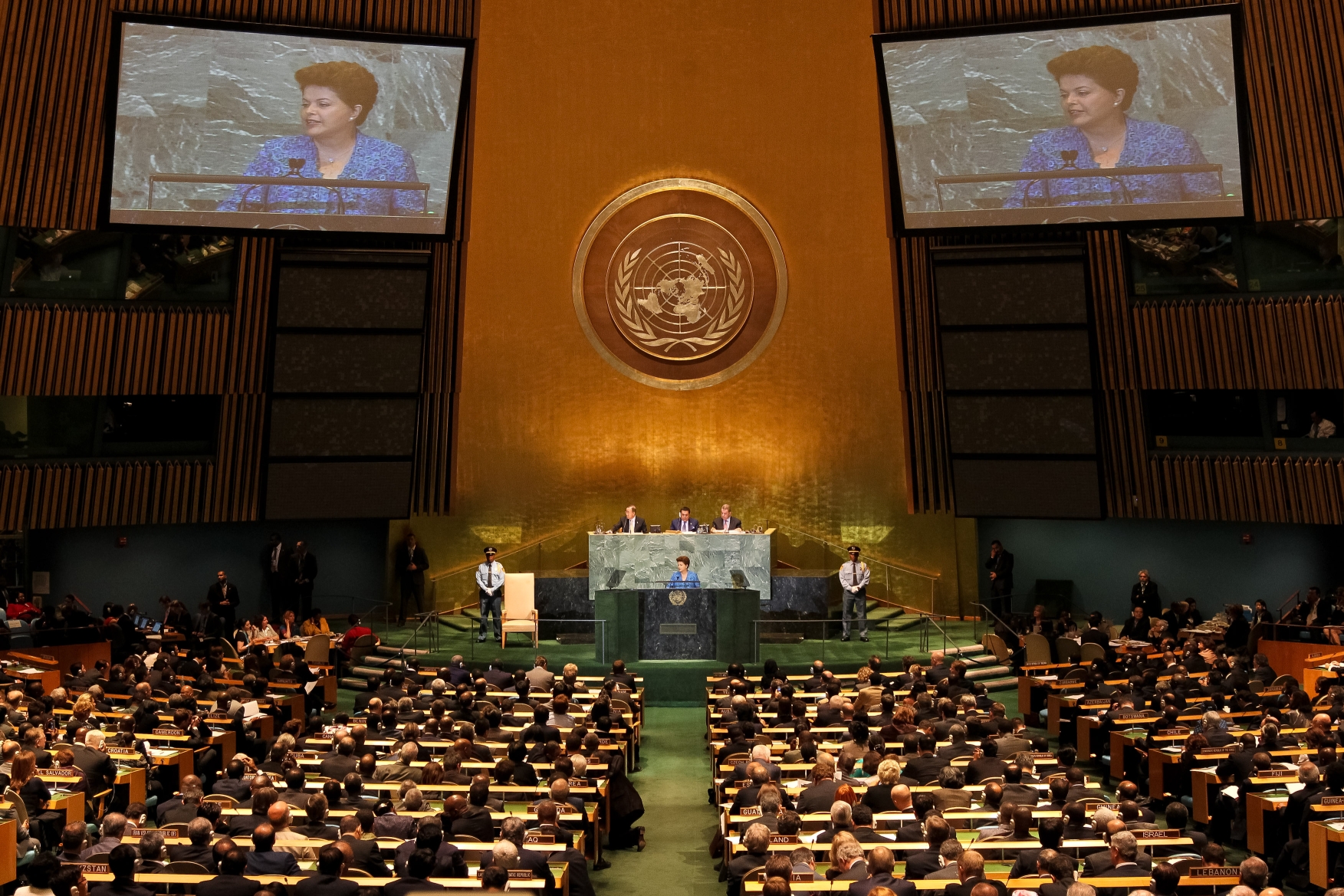
When the U.N. General Assembly listens to a speaker, how much is lost in the translations?
"As you know, translation is really a problem-solving task. Every once in a while you see the original and something comes into your head that is also a formal solution to the problem of getting it into lively English, and you feel like you've written a poem. But that's pretty rare. I wouldn't exactly say it's more like doing crossword puzzles than it is like writing poetry, but it's a mix of the two. "                    

- Robert Hass, "Interview: A Common Language"


Ask Google Translate to do its work on "poets online" and you will get in Italian "poeti in linea" and in French "poètes en ligne" and though I can't read Japanese, I'm sure that  詩人オンライン is also a "poet on a line" of some type. Something is certainly "lost in translation."

Translation is difficult. Edward Hirsch says that "Strictly speaking, total translation is impossible, since languages differ and each language carries its own complex of linguistic resources, historical and social values. This is especially true in poetry, the maximal of language."

The translation of poetry needs something more than simply translating words and getting the same general meaning. In defining "translation" for his Poets Glossary, Edward Hirsch notes:
That’s why its untranslatability has been one of the defining features of poetry. Samuel Taylor Coleridge coined the word untranslatableness. Robert Frost famously said, “Poetry is what gets lost in translation.” An Italian pun captures the idea: traduttore/traditore, translator/traitor.
You can find advice about translating poetry, but I am interested here more in using poetry to talk about translation.

We sometimes say, "Let me translate that for you" meaning that we will rephrase something complex into a more understandable form.  We use the expression "in simple English"  in this way.

Richard Blanco's poem"Translation for Mamá" begins:

What I’ve written for you, I have always written
in English, my language of silent vowel endings
never translated into your language of silent h’s.
               Lo que he escrito para ti, siempre lo he escrito
               en inglés, en mi lengua llena de vocales mudas
               nunca traducidas a tu idioma de haches mudas
.
He writes his poems and also translates it into his mother's Spanish.

But "How do I say it?” is what Joy Harjo is really concerned with in her poem “Deer Dancer..”  Though she can be referring to the language of her own Mvskoke/Creek Nation, she is also talking about the inadequacies of all languages. 

How do I say it?  In this language there are no words for how the real world
collapses.  I could say it in my own and the sacred mounds would come into
focus, but I couldn’t take it in this dingy envelope.  So I look at the stars in
this strange city, frozen to the back of the sky, the only promises that ever
make sense.
Harjo is trying to tell a story about an incident in a bar, but language can't quite convey all that happened there that night.

Nearly everyone had left that bar in the middle of winter except the
hardcore.  It was the coldest night of the year, every place shut down, but
not us.  Of course we noticed when she came in.  We were Indian ruins.  She
was the end of beauty.  No one knew her, the stranger whose tribe we
recognized, her family related to deer, if that’s who she was, a people
accustomed to hearing songs in pine trees, and making them hearts.

The word "translation" derives from the Latin translatio, which in turn comes from trans- and fero, meaning “to carry across” or “to bring across.” It usually mean the transfer of meaning from one language to another, but it also is what we do in interpreting the world around us every day.
One of my poems is about this everyday translating we do - from other languages, in interpreting the world and certainly in writing and reading poetry.

Translation

My grandparents would speak Slovak
with my father, the aunts and the uncles
at the Sunday dinners at their home in Newark
when they didn’t want us to know.
In those days, the priests spoke Latin.
That was the mystery of the faith.
The boys on the #42 bus spoke Spanish
as I rode to my afterschool job
and when they laughed, looking in my direction.
Too fast for my B+  Spanish III  understanding
but enough that it hurt.
The waiter at the Chinese restaurant
changes my order into words
that I want to understand,
but will  never know.
Translation.
This is the poet’s job,
and the job of the reader too.
We have been in training
all our lives.

- Kenneth Ronkowitz

Our writing prompt for November is a poem about translation in any of those three ways: from other languages, in interpreting the world, or in writing and reading poetry.

Friday, 4 November 2016

Translation and Robert Fitzgerald

Ulysses and the Sirens by John William Waterhouse (1891)

“I think that one poet is lending himself to the other poet, that the obligation is to the other poet, and that one is taking on for the time being the spirit and impulse and intent of the other poet, and so the wish is to make all that clear in one’s own language rather than express oneself, so to speak.” - Robert Fitzgerald

Robert Fitzgerald is best known for his English translations of Homer’s The Odyssey (1961) and The Iliad  which are pretty much the standard works used in schools.

I recently read about when he was a student at Harvard University. He read T.S. Eliot’s "The Waste Land" and said that it changed his life. He began to write poetry. He got published in Poetry magazine.

While still a student, he got to met Eliot while in London and gave him one of his poems. Eliot studied the poem for several minutes and then looked up and said, “Is this the best you can do?” I can imagine such a remark having a devastating effect on a young writer.

He graduated in 1933 and worked as a reporter, but kept writing poetry. He published Poems (1935) and A Wreath for the Sea (1943).

He served in the Navy during World War II, including time in Guam and Pearl Harbor. He had with him the works of Virgil and a Latin dictionary and, though he had no training in translation, he would translate Virgil a line at a time into a notebook.

Fitzgerald teaching at Harvard
After the war, married and with a family, he began teaching, first at at Sarah Lawrence College and later at the University of Notre Dame, the University of Washington, Mount Holyoke College, Princeton University and Harvard. He also served as poetry editor of the New Republic.

He went back to his wartime translations and convinced an editor to advance him money for five years to translate Homer’s The Odyssey. With that and a Guggenheim award, he took his family to live in Italy for a time.

He was very much a formalist in his poetry, something certainly influenced by the classics. His own influence on his students helped drive the New Formalism of the late 20th century in American poetry. That approach promoted a return to metrical and rhymed verse.

His verse translations of Homer’s The Iliad (1974) and The Odyssey (1961) and Virgil’s The Aeneid (1983), as well as other classics and his own poetry brought him many honors.

From 1984 to 1985, he was the consultant in poetry to the Library of Congress (the position now known as Poet Laureate).

Poetry Update


Since starting up Terrapin Books, my new small press for poetry books, I've been giving scant attention to my own poetry. The bulk of my time has been spent learning how to make the books happen, i.e., how to obtain the manuscripts, how to format a book, how to make a book cover—and a score of other tasks. But I've got the basics covered now, our first four books have been published and two more are underway, the original The Crafty Poet has been published in a revised edition by Terrapin, and the new The Crafty Poet II is out in the world. So I find myself with some free time! Time for poetry.

First an update on my own still new poetry collection, The Uneaten Carrots of Atonement.

Click Cover for Amazon
I've had several nice reviews to boast about.

Satire on the Menu
by Zara Raab  

Better View of the Moon
by Karen Craig 

Washington Independent Review of Books
by Grace Cavalieri, includes the poem "Your Blue Shirt" 

Boston Area Small Press and Poetry Scene
by David P. Miller


I was also interviewed about the book, about how it fits in with my earlier books, what my intentions were, and some craft issues.

The Schuylkill Valley Journal
by Adele Kenny


In September I drove up to Manchester, New Hampshire, to participate in The New Hampshire Poetry Festival organized by Jennifer Militello. I'd sent in a proposal to give a presentation about Terrapin Books, a kind of behind-the-scenes look at what's involved in beginning a new small press. The presentation was called "Terrapin Books: From Seed to First Fruit." The culmination was a group reading with poets from The Doll Collection, Terrapin's first publication, an anthology, the first-ever to focus on dolls. I had a great time!

In October I participated in the Geraldine R. Dodge Poetry Festival in Newark, NJ. As a Dodge poet, I worked there on Thursday and Friday, hosting a few events. That's a great opportunity to hear some poets and do a bit of service for the poetry community. Friday was the most populated day as it was Student Day. Look at all these teenagers!

That's inside the Performing Arts Center. If the weather had been more cooperative, many of these kids would have been outside enjoying the food court, walking around, and sharing poetry. But trust me, they had a great time!

The highlight of the festival for me was reading on Saturday. I read in the beautiful Trinity & St Philips Cathedral, one of several festival locations. My co-readers were Robin Becker, Marty McConnell, Christian Campbell, and Aaron Smith. I last read at the 2006 festival, a whole decade ago. That time the venue was the Waterloo Village in Stanhope, NJ, a rural setting.

I was also happy to see that I sold a boatload of books in the B&N bookstore at the festival. Sold a bunch of my poetry collections and completely sold out of The Crafty Poet and The Crafty Poet II.

Here's a onesie I couldn't resist buying for my new granddaughter. Poet-in-training?

Now, of course, it's also time to pick up the pen and get back to writing new poems. I'm happy to say at least that these past few weeks have seen the completion of two poems that I started long ago—one 3 years ago and one maybe a year ago. That feels very good. I need more.