ADD

Monday, 29 June 2015

Papatoetoe Poems by Tony Beyer

1 Early Days

the billy that rang empty
on its hook against the gate post
last thing at night
was full of the colour of starlight at dawn


2 Originals

them kumaras is really gallopin now
Mr Kilgour in braces and hobnail boots
he'd stamp and click on the path
like a horse modestly skittish in its stall

when he came over to use our phone
party line 796D
he shouted as if he believed
a hollow and

Friday, 26 June 2015

West Caldwell Poetry Festival Featured Poet: Therese Halscheid


Therese Halscheid was one of the six featured poets at the 2015 West Caldwell Poetry Festival.

Therése Halscheid’s most recent book of poems is Frozen Latitudes (Press 53). Other collections include Uncommon Geography, Without Home, Powertalk, and a Greatest Hits chapbook. Her poetry and lyric essays have appeared in many journals, among them The Gettysburg Review, Tampa Review, Crab Orchard Review, and Natural Bridge. By way of house-sitting, she has been an itinerant writer for several years. Her travels have taken her from the Florida Panhandle to the Arctic north of Alaska, where she lived with and taught poetry to an Eskimo Inupiaq tribe.

Frozen Latitudes melds two journeys, where lives are at the very edge of survival. One is the literal location of Alaska where Halscheid lived among clans of an Inupiaq tribe, as well as in the frontier town of Homer. The second location is the place and time where her father’s life was frozen when, during heart surgery, he suffered brain damage. In this collection, the journey into the cold becomes a metaphor for a family struggling with dementia.


Praise for Frozen Latitudes:
“'My lips, bright as scars, are parting / open with words,' writes Therése Halscheid. In these moving poems of loss, interwoven with vivid poems inspired by people and the landscape of Alaska, she composes resonant lines imbued with deep emotion."
          —Arthur Sze, author of Compass Rose

Frozen Latitudes won Honorable Mention for The Eric Hoffer Book Award for Poetry. The collection is reviewed in the US Review of Books. Read the Review

Click Cover for Amazon

Trash Day

This is how it really looked long ago….

This is myself back in time, a girl
with sallow skin, dragging metal cans to the curb,
notice how I stand for awhile that far from our house
watch how my lips, bright as scars, are parting
open with words so the great air can take them
out of their mystery --

see how my thoughts form the storms, how the morning sky
fills with dark sentences

always something about aphasia, his dementia,
something always about my father caught
so quiet inside me

that would rise in the wind to become
something readable.

I am only fourteen. But you can tell I look old
as if life is ending. Notice how my limbs droop so
willow-like over the trash, see how the cans
are all packed with food, know I am starving myself, I am
that full of my father….

These are our neighbors, each turning in their sleep as they wake,
each waking as they turn from their room to the window
watching the weather above them.

And this is an image of the whole town in shock.
See how they dread my gray hovering grief, just watch
as they walk, how they carry on with the endless clouds
I made weekly, correctly, so very awful and coming
into their eyes.


Here's the prompt that Therese challenged us all to try:
  
Select a topic that is risky for you and allow yourself to free-write about it. A few lines, a paragraph, a page, it does not matter. Just spend a few moments writing. Then go back to what you have written and circle a sentence or phrase. Lift it out. Using that sentence or phrase as a starting point, free-write again. This exercise is helpful in allowing you to experience how writing unfolds in layers. Note how you are moving from a surface experience to crisp details, from abstracts to images. You can try this again and again as a way to enter the heart of the matter, which then becomes powerful material for a poem. 

Monday, 22 June 2015

Sugarloaf hill by Bill Sutton


I like to start my morning walks

earlier in late summer

before the Hawke’s Bay heat engine

gets going
and the flies start up.


There are people already

some with dogs...

we smile and exchange

handfuls of words.


Scratches in the dirt

like some post-modernist

literary text

signify a rabbit


and I see the ragwort

is making a comeback

from spraying and

Sunday, 21 June 2015

The Collected Poems of Chika Sagawa
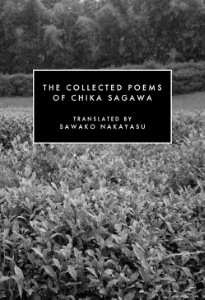

The Collected Poems of Chika Sagawa 

Chika Sagawa
The Collected Poems of Chika Sagawa
Translated by Sawako Nakayasu

Canarium Books
http://www.canarium.org

ISBN: 978-0-9849471-6-4


____________________________________

Review of The Collected Poems of Chika Sagawa
by Joel W. Nelson
I believe poetry is the study of language. Unlike spoken language, it is a language of the heart, not visible from the surface. It is the filling of the air with words selected out of deep contemplation. Not a gathering of the meanings of words spoken to be spoken, but an attempt to say something, or to reflect something. Very sparse and most strict, it is a skillfulness right on the brink of burning out like a flame.
          - "When Passing Between Trees"
Sagawa Chika was born in 1911 in Yoichi, Hokkaido in Japan and lived a short life, dying of stomach cancer in 1936. Although she was sickly nearly her entire life, the poems she left behind are brilliant and bold. They are vibrant with color and imagination. Her Collected Poems, translated by Sawako Nakayasu, is a testament to Chika's genius. The translations feel fresh and could easily pass as contemporary work.

Chika's poems are very much a collision of imagination and reality. They are full of unexpected twists and turns. As soon as the reader might begin to reach a level of understanding, Chika is likely to direct the poem in a new direction:
A thicket of asparagus
Dives into the dirty afternoon sun
Their stems cut off by glass
Blue blood streams down the window
And on the other side
Is the sound of a fern unfurling
          - "One Other Thing"
In the prose piece "Had They Been the Eyes of Fish," Chika observes, "Perhaps the way poetry finds expression is by taking materials that had once been reflected in reality and returning them to the realm of thought." When these "materials" are returned to thought, they do not always retain the constraints of reality. There is perhaps a hint of linearity in "One Other Thing," but the way each element is presented is surprising. One would not expect the poet to move from the asparagus diving into the sunset to the blue blood in the window before ending with "the sound of a fern unfurling." The earlier images evoke a kind of chaos, while the final image represents a very slow, deliberate order.

In the essay “Vorticism,” Ezra Poundwhose Imagist ideals were largely extracted from the study of Chinese and Japanese poetry–describes a type of poem “where painting or sculpture seems as if it were 'just coming over into speech.'" This is the poetry of the image. Chika's poetry operates in this sphere, but unlike the stereotypical Japanese image, her images are often abstract:

Rains like flower petals.
Hit by a heavy weight, insects descend the tree shade.
Gathering at the mast wall, trailing a faint breeze – sounds are
   killed by the sun, the waves.
My skeleton places white flowers upon it.
Interrupted by thoughts, fish climb the cliff.
          - "Afternoon"
At first glimpse, "Rains like flower petals" is a simple, if not overwrought simile. The line would normally kill a poem, and yet in the broader context, the line fulfills the function of a surreal image rather than mere simile. If "Afternoon" were to be represented on canvas, perhaps the resulting artwork would be similar to a Salvador Dali painting. Meaning in her poems is often allusive. Wallace Stevens observes in "Adagia," "A poem need not have meaning and like most things in nature often does not have." A reader intent on extracting meaning from Chika's poems will likely come up empty-handed. This is not to say her poetry is meaningless, but rather it is poetry better experienced rather than understood, although the experience of the poem, on its own terms, is itself a sort of understanding.
I have a bit of a fever, my back hurts and I cannot stand up. I eat apples and pears. In the afternoon I chat in quite a loud voice.
          - from "Diary"
One might only speculate what Chika could have accomplished had she lived a longer life. As stunning and impressive as her writing is, it is the work of a young poet brimming with potential but not fully reaching it. And yet ironically, had Chika lived to old age and had these poems been summation her life's work, they would be enough.
____________________________________

Joel W. Nelson spent most of his childhood in the sub-Saharan countries of Burkina Faso and Cote d'Ivoire. He has an MFA in Poetry from Spalding University and lives with his wife and son in Louisville, KY. His poems may be found in the Bellevue Literary Review, the Found Poetry Review, The Louisville Review, and A Narrow Fellow.

Friday, 19 June 2015

West Caldwell Poetry Festival Featured Poet: Charlie Bondhus


Charlie Bondhus’s second book, All the Heat We Could Carry, won the 2013 Main Street Rag Poetry Book Award and the Publishing Triangle’s 2014 Thom Gunn Award for Gay Poetry. Previous publications include How the Boy Might See It (Pecan Grove Press, 2009), and two chapbooks, What We Have Learned to Love—winner of the Brickhouse Books 2008-2009 Stonewall Award—and Monsters and Victims (Gothic Press, 2010). His poetry appears in numerous periodicals, including Poetry, Tupelo Quarterly, Midwest QuarterlyCounterPunch, and Cold Mountain Review. He teaches at Raritan Valley Community College in New Jersey and is the Poetry Editor at The Good Men Project.

All the Heat We Could Carry is a collection of poems written primarily in the voices of a gay soldier returning from Afghanistan and his civilian lover. The poems alternate between the battlefront and the home front, exploring, as they do, questions of masculinity, commitment, and violence.

Praise for All the Heat We Could Carry:
"All The Heat We Could Carry is a rare, brilliant and necessary book, offering a people who have lived well during the war a species of lyric night-vision, a camouflage night, wherein we are taught to field strip a rifle, but also to think about 'the soul, / a puff of wind / shot from the mouth.'" Our wars come home in these poems, through a prophet who’s seen hell, who now lives in the aftermath where all is refracted through the searing lens of wounded memory: 'the sun now heavy as a blood bag, where it is hard to tell / the difference between civilians and ghosts.' These poems move with precision from war to home and back, from stun grenade, body bag and bone saw to a garden in winter. If you want to know, or think you want to know, you must read Charlie Bondhus. If you want to know why, pay attention to the fifth section of his poem 'A Talent for Destruction.' Bondhus is a true poet, and this is among the best books I have read in a very long time."—Carolyn Forché

Click Cover for Amazon
Homecoming

Earlier you had written me
about the roadside bomb’s
oranges, blues, and pinks,
which threw 200-lb men,
wearing 80 lbs of equipment,
into the hot, metal wall
of an Abrams tank.
When you came home in May,
I had a planter
of spiky bougainvillea on the porch;
the first thing you’d see,
a different kind of explosion.

We went to the bedroom
to tend to your body, starved
from fifteen months of hard living.
I smelled chemicals, felt shrapnel’s grit,
saw the places you had been burned.
You told me about the sliver
of metal lodged in your right calf,
bone deep, inextractable, that would not
affect your ability to walk or sit
but would always be there, much in the same
way there will always be war
someplace, affecting our lives.

Lying naked beneath the whup, whup
of the ceiling fan as you smoke
on the porch, I think about flowers and bombs,
the books I read on combat fatigue,
and wonder if this thorn in your leg
is attached to a stem that runs
the length of your spine,
exploding, in your head,
a white phosphorous bloom.


Please give Charlie's prompt a try: 

In the spirit of Sei Shōnagon's Pillow Book, make lists of quirky things. Things I wish I had never said. Red things. Things more embarrassing than nudity. Things to put off as long as possible. Things to die for. Acid things. Things that last only a day. Things that should not be seen by firelight. The lists might inspire poems...or perhaps they are poems themselves.


Charlie has generously offered to have this Call for Submissions posted here. Check it out.

From Charlie Bondhus​ for The Good Men Project: People of all genders are warmly invited to submit poetry (simultaneous submissions AND reprints fine!) to The Good Men Project, a website dedicated to discussing what it means to be a good man in the twenty-first century.

On average, the site gets 3.3 million unique visitors and 8 million page views per month, and each published poem gets featured on the site for several days, so this is a very visible venue! Oh, and the poetry section is listed as one of the "Most Personable Poetry Markets" on Duotrope!

Work dealing with men or masculinity is a plus, though our first standard is simply high quality poetry.

Submit up to 10 pages of poetry, as an attachment, to charlie@goodmenproject.com. 


Thursday, 18 June 2015

The Terrain of Heaven and Hell: Marilynne Robinson


Since the publication of Housekeeping by Marilynne Robinson, I have had deep admiration for this fiction writer who I felt explored realms common to poetry.  What does she think of poetry?  Housekeeping engages readers with women characters in a mountain town in Idaho. Robinson skillfully, fully, beautifully uses the metaphor of water: fluidity, flood, lack of boundaries, and erosion and loss. Robinson connects her stories to myth or deep cultural (and Biblical) stories.

In 2014, Wyatt Mason interviewed Marilynne Robinson for the New York Times. This is an excerpt of his article:
All four of the novels are in conversation with — at times tacitly, at times explicitly — the stories of the Bible. Housekeeping is the story of two sisters, Ruth and Lucille, who, after their mother commits suicide, are abandoned to the care of their grandmother and, after she dies, are abandoned to the care of their grandmother’s two maiden sisters-in-law. They, in turn, overwhelmed by the burden of caring for children, abandon the girls to the care of the girls’ aunt. And she, the girls come to understand, is not a stable person herself. Without question, the novel is preoccupied with the generational, genealogical succession of suffering. But it also makes sustained allusions to the book of Genesis, particularly the flood narrative: God’s failed attempt to wipe the world clean of the very errors he could not eradicate from creation — his creations.
Robinson's female characters are adrift, most often by accident or by dangers posed by others. She places her characters in domestic situations, but they are not and never seem like they could be domesticated, for the characters reveal dimensions of the truly wild and uncivilized. I like that she places her stories on the margins of society and she uses these margins to explore being.  Her characters are wary but not fearful.  Yet Robinson is concerned about the pervasive fear in our culture today, and she feels it becomes a rationale for avoiding action.  Mason wrote:
And it was here that Robinson brought up fear: How it has come to keep us at bay from our best selves, the selves that could and should “do something.” In her case, that “something” has been writing. For Robinson, writing is not a craft; it is “testimony,” a bearing witness: an act that demands much of its maker, not least of which is the courage to reveal what one loves. 
“A lot of people who actually believe in the sacredness of life, they write things that are horrible, desolating things, ” Robinson said. “Because, for some reason, this deeper belief doesn’t turn the world. . . . It comes down to fear; the fear of making self-revelation of the seriousness of ‘I sense a sacredness in things.’ ”
In Housekeeping, Robinson opens the story with a tale of the grandfather and a train derailment:
The disaster took place midway through a moonless night. The train, which was black and sleek and elegant, and was called the Fireball, had pulled more than halfway across the bridge when the engine nosed over toward the lake and then the rest of the train slid after it into the water like a weasel sliding off a rock.   
 The sound of the language evokes poetry: the image is drawn with vivid strokes.  The alliteration: "midway through a moonless night." The m sound shift to l sounds: "black and sleek and elegant...called the Fireball, pulled..."  "into the water like a weasel sliding..."  Some vowel sounds also are particularly powerful:  through/moonless; nosed over; off a rock.  The midway-ness of the night and the train on the bridge underline the midway-ness of the lives interrupted by the event. It marks the town. It presages the suicide of the girls' mother who also takes her car and drives off a cliff.  It begins a cascade of loss: The train disappears, the mother disappears, followed by the grandmother, and the great aunts.

In Lila, Robinson opens the story with Doll mercifully removing the child Lila from the cold porch where she's been put. Her decision was an impulsive act, a kidnapping, but had she not taken her, the child probably would have died:
She hitched up her apron to cover the child's legs and carried her out past the clearing. The door might have opened, and woman might have called after them, Where you going with that child? and then, after a minute, closed the door again, as if she done all decency required. "Well," Doll whispered, "we'll just have to see."  
The road wasn't really much more than a path, but Doll had walked it so often in the dark that she stepped over the roots and around the potholes and never paused or stumbled. She could walk quickly when there was no light at all. And was strong enough that even an awkward burden like a leggy child could rest in her arms almost asleep.   
Again the spare and vivid images and the alliterative phrases create a powerful beginning.  This is an act of courage that saves Lila's life, and marks a fugitive existence. Doll must fight with her ready and finely honed knife--the members of Lila's family have followed in pursuit or in revenge--and Doll takes the life of a man. After Lila meets the Reverend, marries him, and waits her child's birth, the novel traces her haunting memories, secrets, and speculations about her origins. Her early life, in the company of Doll and the loose group of homeless, itinerant workers was a tenuous existence.

The knife is a significant metaphor of survival used to prepare food, defend, and even cut the girl's fine hair. It severs Lila from her past; it protects her, and finally it becomes a talisman of the woman who loved her.  This last remaining link to Doll Lila treasures.  In this marriage, Lila constantly thinks of departure; the thoughts are a metaphorical knife that threatens to cut her marital and community ties. She is welcomed in Gilead, but she finds it difficult to acclimate to a routine, safe life.  Trust is slow in coming. Her world doesn't feel quite real. She has been so damaged by neglect, mistrust, and abuse she can hardly relate to her new role as the wife of a pastor.

Lila's questions about her past are never answered, and her questions of why life is like it is are also left to linger, and slowly she and her husband, the elderly Reverend, find their way to a conversation, in their growing intimacy, that explores that question.

Poetry takes many forms; and I find it in the writing of Marilynne Robinson. In a review of Harold Bloom's American Religious Poems, Marilynne Robinson writes:
The threshold between the life we know and whatever follows is a mystery religion has always addressed, and for which it has tended to provide the imagination with language and imagery. Dante and Milton created grand visions of a cosmos ordered to serve the ends of divine justice. But there is strikingly little interest among American poets in mapping the terrain of heaven and hell. In place of mythopoesis, their attention is turned on the actual, the phenomenal. And it is turned on the universal, solitary, subjective experience of the transformation, or the end, of consciousness. If death is the mother of beauty, it is the mother also of the deepest self-awareness, the consciousness of the nerves and senses that translate experience as beauty, and as meaning.
The marriage of Lila and the Reverend is a good marriage, and yet it measures the distance between the two people with vastly different life experiences. They almost don't speak the same language.  Lila grew up illiterate and unschooled, except for one year.  She doesn't have words for things, but like many illiterate people, she makes like she understands. The one thing that she does read is the Bible, rich in poetry. Robinson's new book maps the terrain of heaven and hell with aching beauty.

Monday, 15 June 2015

Grave secrets by Helen Bascand


If you should bury me,

as I have requested

with my hands clasped,

bury me wearing this bird


ADD

ADD

Labels

Popular Posts

Post Top Ad

LightBlog

Blog Archive

Post Top Ad

Your Ad Spot

Blog Archive

Post Top Ad

Your Ad Spot

Author Details

??? ??? ??? ?????? ?? ??? ????? ????? ??? ??????? ????? ?????? ????? ?????ً،??? ???? ???? ?????? ?? ???? ??? ?????? ???? ????? ?? ?? ???? ?? ????? ?? ???????? ???? ????? ??? ??????? ????? ???? ?? ????، ??? ???? ???? ?? ??? ?????? ??? ?? ????? ??? ????? ??? ???? ????? ?? ?????، ??? ????، ??? ????، ?? ??? ??? ?????. ???? ????? ???ً ?????ً ??????ً.

??? ???????

Music

Tags

'Crayfish' 'Grass' " Poet on the Poem "This Is Love" #nspk 1980: Eugene Schieffelin Releases 80 Starlings in Central Park 2004 2014 2015 Poet's Market 32 poems 3rd birthday 4th birthday a boy" a garage A Jay Feather A letter to Jim Harrison a lightness a thirst or nothing at all a poem for the innocents A Room of Her Own Foundation 6th Gift of Freedom Award Winner 2013 a scrap of linen a bone a thirst A whimper after the bang A.J. Ponder Aallotar aarnio Abdullah Servant of God abecedarium about us abundance Academy of American Poets Accents Publishing acrostic adanna Adele Kenny Adrienne Rich advice to poets afastina Agnes Martin Ai Aimee Nezhukumatathil Aira Airini Beautrais Akhmatova Akron Art Museum Al-Taghrooda Albert Park Albert Wisner Library Albuquerque poetry aldrich press alessandra lynch alexis rhone fancher Alfred Lord Tennyson algebra and fire Ali Alizadeh alice friman Alice Miller Alice Walker Alison Luterman alison townsend all the heat we could carry Allen Ginsberg allusions Alohi Ae'a Always Almost Never Quite Amazon listings american idol american life in poetry amorak huey amy maclennan Ana Mendieta Anahera Gildea Anahera Press Anaïs Nin andrea potos Andrew M. Bell animal Animal Time animals ann carson anna evans Anna Jackson anna m. evans Annabel Hawkins annata anne carson Anne Manchester Another Exile Paints a Spring Portrait of Katherine Mansfield anthologies anthology of donut poems Anthony Fife Antler antonio machado Anya Krugovoy Silver Aotearoa Runaway Appetites for the Divine April April 1 April and poetry april book sampler archeologist of morning archetypes archives Ariadne Aristotle arranging poems art Art Books Cleveland Art of Poetry Arteles artists arts and community Arts Express arts for the armory ASHAAR Ashes in the Air Aspects of Reality assemblage associative leaps At Melville's Tomb at night in the house attention Atwood Auckland University Press auden audio poetry audre lorde australia australian poet Australian poetry autumn avatar review Awakening the Green Man award awards awp awp 2017 AWP Panel Azimuth Bachmann background Bad Housekeeping bad poetry Bakken Boom! Barbara Sabol Barrow Street Book Prize Barrow Street Press Barry Lopez baseball bay to ocean conference beautiful moment of being lost Becoming Judas Being There Belfast belief belinda hollyer Ben Lerner Bentleyisms bernadette hall bernardsville library Berry best of the net best words Beth Bachmann Bhagavad Gita Biblical story and poetry Bill Sutton Billy Brown Billy Collins Binalong biographical poetry Bird Murder bird watching at the end of the world birthday poem Biwabik BJ Ward blaze vox blogging Blue Five Notebook blue grapes blue spiral blueberry poem bluewords greening BOA Editions Bob Dylan Bob Dylan Poet Bob Walicki bogong moth book design and font size book launch book news book party book review book reviews books borders Borges Botanical Poetry bottles the bottles brain rumbolo Brave Like Breeze Through Bamboo Breton brian rumbolo Brightly Burning Broken/Open Bub Bridger buber burns burntdistric Burt Kimmelman Buson c k stead caleb price California poetry Calle Florista Callithumpian Calvino Canadian Poetry Canadian poets Canal Laureate Canarium Books canberra cancer candle canzone Carcanet Press carl dennis Carl Jung Carl Sandburg Caroline LeBlanc Caroline Levine Carolyn Forche Carolyn McCurdie carson caselberg poetry prize 2013 Castellanos Cat Doty Catherine Bateson Catherine Fitchett Catherine Owen Cats and Spaghetti Cavafy cavankerry press CCLI Cecil Taylor Cecilia Woloch celebrate Celebration of Literary Journals cello cento cervena barva reading series Cesár Aira chana bloch change change and poetry chapbook Charles of the Desert charles simic Charles Wright charlie bondhus chaucer Che Guevarra cherry grove Chika Sagawa childhood children choreotextography Chris Tse Christina Rossetti christina veladota Christine Gelineau christine rhein christine swint cider press review cider press review prize cinema cinematic Cixous Claire Beynon Claire Mabey class Cliff Fell Clodia Metelli cloud birds Cloud of Unknowing cloud pharmacy coastlant Cold Mountain Coleridge Colin McCahon collaboration collaborations collaborative poem Collected Poems Collected Works Bookshop coming down common meter compose journal confessions of a captured angel Conflict Resolution for Holy Beings Connie Voisine connotation press contest context Conversations copyright Cordite cortland review courses Cracked craft book craft tips crafty poet II CRAVE creation stories Creative Community Leadership Institute creative process creativity Creature Feature Crisis Chronicles Press criteria online journals crowns cultural genocide cultural weekly cummings cutting room cynthia marie hoffman Dan Turner Daren Kamali Dave Harrity David Aho David Gregory david howard david kirby David Perez David R. Altman Davis McCombs DC Books dear bird dear outer space death Death in the Foyer death of a parent Dharma di Giorgio Diane Gilliam Diane Lockward diary Diaz Dick Allen dickinson dictionary diderot digging the garden Dinggedicht Dionysus disliking poetry DoC document documentary documentary poetics dodge poetry festival dodge poetry festival 2014 dog dogfish head poetry prize doll anthology domestic scenes don't feed the boy don't tell anyone donut poems Doris Lessing doug goetsch Douglas Kearney drama dream fish floating Drew Pomeroy driftless review duende Duino Elegies Duluth Dunn Early Morning: Remembering My Father Earth Body Eastbourne: an anthology Eastern European poets Eat This Poem echo and lighting echo and lightning Eco-poetry Ecopoetry Ecstasy of Influence ecstatic poetry Ed Davis editor Editor editor Andrew M. Bell editor Belinda Hollyer Editor Claire Beynon editor Elizabeth Welsh editor Helen Lowe editor Helen McKinlay editor Helen Rickerby editor Keith Westwater editor Michelle Elvy editor Saradha Koirala editor T. Clear editor Tim Jones EDtalks Edward Hirsch Eileen Moeller ekphrastic ekphrastic poem Elaine Jacobsson elegy Elizabeth Alexander Elizabeth Bishop Elizabeth Oakes Elizabeth Welsh ELJ Publications Ella Fitzgerald ellen bass Ellen Birket Morris Ellyn Lichvar Ema Saiko emanuele mazzoni Emily Brontë Emily Dickinson Emily Manger emotional abuse encouragement endotic English enjambment Entanglements Enter Text Entering the House of Awe environment epistle equation erasure Erica Goss eros essay Etc. experimental geography experimental histories experimental writing facebook writing conference Factory Hollow Press fairy tales fairytales faith fallow writing periods family farm/rural father fatherhood Fault Fauverie fearful journey feedback female poet feminism feminist Fetal Waters fiction figurative language film Finishing Line Press Finnish Finnish American Reporter Finnish poets Finnish-American Finnish-American poet fiona kidman Firefly first book first lines fishing research Five Islands Press Fixed and Free Fleda Brown Fleur Adcock Flora food food poems for john pule for the love of avocados forché Forgiveness Forgiveness form form poems formal poetry forms forms of grief Four paintings Four Swans fracture Frances Hodgkins Franco-American poets Frank Montesonti Frank O'Hara Frank X Walker Frankie McMillan Fraser River fred d'aguiar free meter free verse freewriting French Connections Frida Kahlo Friday Evening Fringe Fest Fringe Festival frozen latitudes fruit Full Circle Furniture is Disappearing gail fishman gerwin Garrison Keillor gary j. whitehead Gary Snyder gary whitehead Gass Gaston Bachelard gay Gayle Lauradunn Gemma White gender geoffrey philp George Steinmetz Georges Perec Georgia O'Keeffe Geraldine R. Dodge Poetry Festival Germany gerry lafemina GHAZAL"S gift economy ginger murchison ginsberg girl talk girls and poetry giveaway Gladys Koski Holmes Glass Lyre Press Glass Wings Gleam Glück Gnosticism God Golden Shovel good men project goodreads giveaway Gospel of Judas grace taylor grading Grand Rapids grant writing Greg Pape Greg Santos grief group dynamic group reading Gulf of Alaska Gwendolyn Brooks haibun Haida Gwaii haiku hal judge Hal Sirowitz Han-shan happiness research Hart Crane Harvey Mollloy harvey molloy Hawkes Bay he has superpowers headmistress press Headwinds healing Heidi North-Bailey Heights Arts helen Helen Jacobs helen lehndorf helen lowe helen mckinlay Helen Rickerby Herman Hesse hey columbus! thomas hubbard Hibbing hinemoana baker Hiroaki Sato history History of Violets Holan hole in the sky høle in the skY Holly J. Huges home Home Studies homoerotic poetry Hoopla hoopla series Horse with Hat. Agnus Dei horses how I lost my virginity and other heart-stab poems How to be dead in the year of snakes howe Hue & Cry Press Hughes humor hybrid poems hymn form hypermedia hypertext hypertextuality i carry my mother I Clodia ICT identity If We Could Speak Like Wolves if you have linen women imagination imagistic immigrants Implausible Birds improving your poems In Carbondale inauguration poems influences on poetry Ingalls Librry Ingeborg inner life Inner Sky inspiration international intertextuality interview Introduction invective against the bumblebee Ireland Iris A Law Iris Wilkinson Irish Iron Range irrealism Issa It was a terrible cloud at twilight JAAM Jabberwocky Jac Jenkins Jacqueline Loring jamaican poet jamaican poetry jamaican writing James Ensing-Trussell James K Baxter James Merrill James Norcliffe James Owens James Tate James Wright Jane Hirshfield Janet C. M. Eldred Janette Pieloor Janis Freegard January Begins Jayne Anne Phillips jazz jean sprackland Jeanne Marie Beaumont Jeannine Hall Gailey Jeffrey Harrison jeffrey levine Jeffrey McDaniel Jehanne Dubrow Jennifer Chang jennifer compton Jennifer Swanton Brown jersey tomato press Jessica Cuello Jessica Goodfellow Jewish Jill Jones Jillian Weise Jim Harrison Jo Bell Joan Fleming JoAnn LoVerde-Dropp Joanna Preston Joe Buchanan joe dolce Joel Allegretti Joel W. Nelson Johanna Emeney John Cage John Keats John O'Connor john ross Johnny Devlin Jonathan Lethem Joseph Kalar journal journaling journals journals that accept poetry book reviews journals that read during the summer joy Joy Harjo joyce ellen davis joys of the table Juan Felipe Herrera judging a book contest Julie Gard Julie Kane Julie L. Moore Junot Diaz just a point man in the ocean justen simien justice K. Robinson kaddish Kahil Gibran Kahlo Kalevala Karen George karen paul holmes karla huston karlo mila Kate Van Der Drift Katherine Mansfield kathleen grattan Kathleen Grattan Award kathleen h. roberts. diane jarvi Kathleen Jones Kathryn Stripling Byer Kathy Kituai Kathy McTavish Kattywompus Press Kay Larson Kean University Keats Keith Westwater ken burns Ken Ronkowitz Kent State kerrin mccadden Kettle Bottom Kim Addonizio Kim Moore kim sisto robinson Kim Stafford Kiri Piahana-Wong kirsten dierking Kirsti Whalen Kith Klous Kortekangas Kurt Vonnegut KUWS kyle elden L.L. Barkat laments Lance Olsen landscape Landscape poetry landscape with plywood silhouettes Langston Hughes language Lao Tze Lao Tzu Last Call for the Mitchell Yards launch of Now You Shall Know Laura Boss laurie kolp Lawrence Ferlinghetti leah mcmenamin learning Leave Here Knowing Lee Posna lee upton Leilani Tamu Lena Shull Book Contest Leonard Cohen Les Murray lesbian leslea newman Lessing LeSueur letters Lewis Hyde Li-Young Lee Liberated Words Poetry Festival libretto Liebeslied life Life & Customs life cycle lightness Linda France Lindsay Pope line breaks lines for a new year linguini linkage theory lisa mangini Lispector Listening to Glenn Gould on Orton Scar Litany for the City LitCrawl literary journals Liza Lim Lizz Murphy logic model for poetry Lorca Lord Byron lorde Lorenzo Sandoval Lori Desrosiers lost and found on the b train in winter Louis Jenkins louise gluck Louise Glück love love poems Love Song LSU Press lucian mattison Lucille Clifton Lynx House Press MacArthur Fellow madeleine slavick madness Maggie Nelson Maggie Rainey-Smith magical realism magnolia Makaro Press Mākaro Press Mallarmé Man Runs into a Woman manifesto manuscript manuscript organization manuscript submission maps March 6 Marco Polo Margaret Atwood Margaret Randall Marguerite Porete Maria Gillan Maria McMillan Marilyn Hacker Marilynne Robinson Marisa Cappetta Marjorie Maddox Marjorie Tesser Marosa di Giorgio marriage martha silano Martin Marty Smith Mary McCallum Mary McFadden Mary Oliver Mary-Jane Duffy Marylinn Kelly massachusetts poetry festival matangi tai maths Mayapple Press mayapple writers' retreat Maylis de Kerangal meaning Mechthild von Magdeburg media art Media Poetry Studio meena alexander melissa studdard Melva Sue Priddy memoir memory memory maps Mendeleev's Mandala mental illness Mercury HeartLink meridel lesueur Merlin meta-narratives metamorphosis metaphor Mexico mezzo cammin Michael Farrell michael t. young Michelangelo Buonarroti michele leggott michelle elvy michelle mcgrane Middle East Middle Eastern poetry Midwest Emmy Migrations Migrations: Poetry and Prose for Life's Transitions Mill City Requiem for solo instrument and distance millcity.io Milma Lappala Milosz Minnesota Minnesota mining Minnesota Orchestra Miss Fancy mississippi mistress of the haiku Mitchell Yard ML Liebler Moira Wairama Molly Peacock mom egg review Moos Gallery More Sonnets from the Portuguese Morgan Conservatory morphology of mushrooms Morrison Morte D'Arthur mother Mother Tongue motherhood poems movies mr. west multigenerational abuse muriel rukeyser music music in it musicians my dear dear stagger grass My Geology My Iron Spine Mystics myth nabokov nancy chen long Naomi Guttman Naomi Shihab Nye Napier napowrimo narraticules narrative Narrative machines narrative poetry narrative technique in poetry narrator Natalie Diaz Natasha Trethewey National Poetry Day poems National Poetry Month National Poetry Writing Month nature nature poetry Nature Writing 101 naugatuck river review Naugautuck River Review NAZAM Neil Roberts Nelly Sachs Nelson Bentley NEMBA neruda net art new audiences for poetry New Hampshire Poetry Festival new issues poetry prize New Issues Press New Jersey New Margins new media New Mexico New Mexico poet new online journals New Pacific Studio new poetry book New poetry books new poetry craft book New Providence Library New Rivers Press new work New World Finn new zealand New Zealand Poetry news News from the Island. newspaper article nic sebastian Nicelle Davis nicole cooley nicole gulotta Night Ballet Press night swimming Night Train Red Dust nighttrainreddust Nin NJ No Coward Soul is Mine No H8 No time like the ‘80s/ No future Nobel Prize for Literature noise Nola Borrell noopiming northern lights northern spark Northern Spark 2015 Not Saying Goodbye at Gate 21 notebooks Notebooks of Malte Laurids Brigge notes for the translators novel novella in verse NYQ Books nzepc O'Keeffe object poems objectivist objects obsession: sestinas in the twenty-first century occasional poetry occult ocean creek Octovofest ode Oh Dirty River old music Oliver Oliver Bendorf oliver de la paz Oliver Sacks Olli Kortekangas Ollie Kortekangas Olsen on poetry on small planes On the Relation of Psychoanalytic Psychology to Poetry on writing One Human in Height one period vs two One River Many Stories One story and the other online online journals online poetry online submissions open reading period open reading period for poetry books open readings opera or nothing at all Oranges and walnuts (still life by Luis Meléndez) Orchid Tierney orchids Orfeo organic fruit organization of a poetry book organizing a manuscript Origami Dove origin of birds original sin Orpheus Otago University Press Oulipu Outpost overtext overtipping the ferryman Ovid P. J. Harvey P. Yogananda P.S. Cottier p&w Pablo Neruda palimpsest palmy Pandora panel presentations pantoum Papa Papatoetoe Poems paper doll fetus Paraclete Press parenting Parmenides Pascale Petit passing of a Christchurch poetry identity pat white Paterson Paterson Literary Review paterson poetry festival patricia fargnoli Patricia Lockwood Patricia Sykes Patter pattern language patterns paul broderick Paul Hostovsky Paul Seeba Paula Morris Peacock Pen Pal pepek the assassin peppermint chiffon pie peregrine nation performance performance poetry Periodicity persona poem personification Peter Munro Petra White Petrarch philip salom Philip Terman Phillips phoebe physical abuse Piglia Pigs Pitas planchette plath Playlist plays playwrights plot poem poem "Cloudmother" poem "Lucifer In Las Vegas" poem "The Baobab Tree" poem "This is the way the world ends" poem drafts Poem in Your Pocket Day Poem-a-Thon Poem: "Grave secrets" Poem: "Like a Reed Boat" Poem: At Koukourarata/Port Levy Poem: How They Came To Privatise The Night poem: matthew 11:28-30 Poéme Objet poems poems "Chemotherapy" and "In the corner of my mind poet poet as singer poet Daphne Gloag poet Emma Neale poet Hamish Petersen poet Helen Bascand poet Helen Rickerby poet Joanna Preston poet John O'Connor poet Kerry Popplewell poet laureate poet lore poet Maria McMillan poet Mary Eliza Crane Poet on the Poem poet Rachel Sawaya poet Siobhan Harvey Poet Tracey Sullivan poet Tulia Thompson poet William S. Rea poetic form poetic space poetics Poetics of Space poetry poetry & change poetry & spirit poetry and food poetry and music poetry and technology poetry anthology poetry book poetry book contests poetry book reviews poetry books poetry books and font size poetry books. new poetry titles poetry center Poetry Center at PCCC poetry cookbook poetry craft book poetry craft books poetry craft e-book poetry craft talk poetry event poetry festival poetry festivals poetry in schools poetry Iron Range poetry journals poetry manuscripts poetry month poetry newsletter poetry of class poetry of place poetry online poetry only journals Poetry prompts poetry publications poetry reading poetry reading AWP poetry reading. jackson inn poetry reading. women's history month poetry readings poetry reviews poetry salon poetry slam poetry storehouse poetry submissions poetry super highway poetry textbook poetry textbooks poetry tutorials. holiday gift books for poets poetry video poetry workshop poetry workshops poets poets & writers Poets Mary McCallum and Frankie McMillan poets online poets wear prada poety point of view political poetry pop culture portfolios Possibility of flight Post Modern poetry power pr poetry readings practice practicing writing presentation press 53 Pricking print journals print journals that accept online submissions print journals that read in summer priscilla orr process profile interview Project Lulu promotion for poetry books promps prompts pronoun usage prose poems prove gallery Provincetown Fine Arts Center psalms PTSD publishing publishing an anthology Pudding House Poetry Salon pulse punctuation Pushcart winner pyromania Quail Flat 1960 Queensland University Press queyras Quickly quotes r.g. evans rabbit ears Rabbit Punch Race Rachel Dacus Rachel O'Neill Racism Radio Pluto Rainer Maria Rilke Ralph Waldo Emerson Randall Rangatira Raymond Carver Review razor wire readability of poetry books reading reading poetry readings realism recently deceased Christchurch poet recommended poetry books Red Book Red Hen Press redactions reflection refugee rehoboth beach poetry rejection religion religious Remorseless Loyalty renee liang renga requiem poem residency resilience resonance resources rethabile masilo review reviews of poetry books revised Crafty revision rg evans Rhonda Pettit Rhydian W. Thomas rhyme Ricardo Piglia Rich Richard Blanco Richard Hugo Richard Wilbur Riemke Ensing rilke Rimbaud RIP Helen Bascand RIP John O'Connor Ripples Under the Skin Road to Williston Project Robert and Shana ParkeHarrison Robert Bly Robert Brewer Robert Browning robert creeley Robert Fitzgerald Robert Frost robert gray Robert Hass Robert Hayden Robert Louis Stevenson Robert Miltner Robert Pinsky Robert Sullivan Robert Sward Robin Hyde robin smith chapman Robynanne Milford rock'n'roll role of art ronka rose red review Rosemarie Waldrop rounakari rukeyser Rumi runes runo runoja rural rural poverty rural/farm life Ruth Corkill Ruth Foley Ryan Teitman safety salem Sally Rosen Kindred Salt Publishing sam hunt sam rasnake sandburg santa claus Sara Pajunen Sara Teasdale Saradha Koirala sarah blake Sarah Broom Sarah Broom poetry prize Sarah Freligh sarah jane barnett Sarah Rice Sarah Ruhl saturday science scratches Seán Lysaght Seattle Seattle. second book secrets seeing self-publishing selfie sensuality Seraph Press sestina anthology seven online journals sex sexism shaddap you face shadows Shane McCrae sharing Sharon Olds shawnte orion Sheila Packa poems shelley Sherry Chandler short poems sia figiel Sibelius Silence Silences Simic simien simone weil sisters and courtesans size of manuscript Sketch Skol slate small press for poetry small press publishers Smith/Doorstop Books so there social change social class social violence solastalgia solitude some last things someone forgot to tell the fish sondra gash song of the bird gamayun Sonia Sanchez sonnet Sonnet for a Hunter sonnets sophronia Sophronia Two sound sources Southbank southern poetry review Spalding University Speaking of the Balloonist spectral traces Spinifex Press spirit boat Spirit of the Depth spiritual spiritual poetry spirituality sports SS Ventnor St. Peter's B-List Stacyann Chin stairway of surprise stalwart of the Canterbury poetry scene stanzas Stefanie Lash Stein Stephen Dunn Steve Brightman stevens storytelling structure students Submarine submission call submission fees submission guidelines submission period submissions submittable Sufi poets Sugar Magnolia Wilson summer journals summer submissions Surface surrealism Surrender Susan Elbe Susan Griffin susan laughter meyers susan lewis Susan Musgrave susan rich Susan T Landry Susanna Childress Svetlana Alexievich Sweden sweet: a literary confection swimming in the rain swing Sylvia Plath symbolism symbols that make up the breaking girl szymborska T Clear T.S Eliot tahoma literary review Taken Tales of King Arthur tanka tar river poetry Taradale taste Taylor Taylor Mali teachers teaching teaching poetry teaching writing tear water tea technology ted kooser TED talks Teija Niku tell me what Temper Templar Poetry teresa carson Terrance Hayes terrapin books Texas text textile texting textuality texture thank you That girl The Abbotsford Mysteries The Almost Sound of Snow Falling The Argonauts The Arranged Marriage The Art of Excavation The Biography of Mr Carrot the blue hour The Book of Goodbyes The Box Gallery the canopy The Cincinnati Review the clues the crafty poet the crafty poet e-book The Crafty Poet II the crafty poet pizza the daily poet The Doll Collection the Fox the gift The Glass Rooster the good men project The Great Dying The K.M. File The Kent State University Press The Lustre Jug The Mother Tongue the music in it The Navigator The night I pierced my own belly button the persistence of longing the poetry of cooking the poetry storehouse the practicing writer the river in our blood - a sonnet crown The River Sequence The Root Cafe The sentiment of goodly things The Shipwright's Love Song The Spectral Wilderness The Stars Like Sand the suitable girl the sun the third form The Topography Of Wellington The Truth Garden The Tuesday Poem Blog the uneaten carrots of atonement the view from saturn The Votive Angel The Woodcarver's Wife the writer's almanac the yellow buoy The Zoo Father theater therese halscheid this city this is poetry project This Must Be The Place this visit Thomas Lux Thrush Poetry Journal anthology tiferet Tiger Bark Press Tigers At Awhitu tika Tillie Olsen Tim Jones Tim Seibles Tim Upperton Time of the Light timing titles tom holmes Tom Wayman tomas Tranströmer Ton Morrison Tony Beyer tony hoagland Tracy K Smith trains translation transmedia trauma Trethewey Trout Truth and reconciliation tuatara tuesday poem Tuesday Poem Blog Tuesday Poem: "Love Poem in Allelujah" Tulia Thompson tupelo press Twin Ports Arts Express Two Lips Went Shopping Two Ravens Press typography U of Chicago Press U.S. uk Ultima Thule Uncivilization: The Dark Mountain Manifesto; Paul Kingsnorth Uncoupling undertext undertow unsolicited book reviews untying the knot Up Here On The Hill upon the blue couch Uruguay US Uses of Literature Valentine's Day valparaiso poetry review Vänskä Vaughan Gunson Vermilion Trail Vestiges Victoria University Press video video poems videopoetry Vietnam Vincent O'Sullivan NZ Poet Laureate violence Virgil's Georgics virginia virginia letter Virginia Woolf visceral realism vision visual art voice W.B. Yeats W.H. Auden Wade Bishop waha | mouth wall Wallace Stevens Walleah Press Walt Whitman walter bjorkman wang ping war war poetry Warren County Poetry Festival Washington WDSE weaving Weil welcome rain books Wendell Berry west caldwell library west caldwell poetry festival west caldwell public library Western Australia what feeds us What Heartbreak Felt Like what i should have done What the Water Gave Me What We're Reading Now when we watched movies where your left hand rests Whitepoint Press Whitman Wild Daisies wild flight Wild Iris Wilderness Wildwood River Wildwood River Press Willa Cather William Carlos Williams William Gass William Shakespeare William Stafford William Woolfitt William Wordsworth Williams Wind Publications wingbeats winner of the Perugia Press Prize winner of UK National Poetry Competition winning poem from Takahe 2012 Poetry Competition winter Wislawa Szymborska witness women women miners women poets Women's History women's history month women's poetry woolf WordFarm WORK workshop World Poetry write against darkness writer's block writer's voice writing writing about work writing distractions writing goals Writing groups for women veterans writing practice writing process writing time writing triggers writing workshops WSDE WW II Yawn yes You are nocturnal but I am an insomniac young minds Yusef Komunyakaa Zbigniew Herbert zireaux Zireaux.

Send Quick Message

Name

Email *

Message *

????????

Categories

Recent Comments

Recent Post

Facebook

???????

Featured

Recent

Advertising

Ad Banner

Follow Us

Test Footer

LightBlog