Poetry uses forms and conventions to suggest differential interpretation to words, or to evoke emotive responses. Devices such as assonance, alliteration, onomatopoeia and rhythm are sometimes used to achieve musical or incantation effects.
ADD
Sunday, 30 November 2014
How Much Are You Willing to Pay?
As you know, many print journals now use online submission managers such as Submittable for submissions. Many of these journals are no longer willing to accept snail mail submissions. That’s fine with me. Makes my life easier. In the past few years, several of these journals have begun to charge a submission fee, usually $2 or $3. Although some poets I know are very annoyed about this and some of them refuse to submit to any journal that charges a submission fee, I’m not particularly bothered by it. Seems like a fair trade-off to me. I don’t have to use up my paper supply, two envelopes, postage for the sending and the SASE, or gas going to the post office. At their end, the journals get a little compensation for printing out submissions or reading on screen.
However, the other day I saw the name of a print journal that was new to me, so I checked it out. I’m not going to name it but will say that this journal publishes work by women only. The journal pays $50 for fiction and non-fiction and $35 for poetry. Great. I wouldn’t mind paying a small submission fee to a journal that compensates its authors. So everything looked cool until I got to the submission part. That’s where I saw the $15 reading fee! (Yes, I put an exclamation point there to register the jolt I got at such a fee.) And that’s for just three poems. Now keep in mind that there’s a difference between a submission fee and a reading fee. I’ll pay the former but not the latter, especially when the amount is so absurdly high. It’s tantamount to paying to be published. Another irritant: they read anonymously so all identifying information must be deleted. I know that some people like that. I find it annoying as it causes me the unnecessary step of deleting the information. I think editors ought to be able to be objective with or without names.
So I’ll keep my money and they can keep theirs.
Speaking of money—Many of you, I’m sure, are familiar with Erika Dreifus and her wonderful blog, Practicing Writing, which is always loaded with useful information for writers. It’s primarily geared towards prose writers, but poets will also find it useful. Every Monday, for example, Erika makes her readers aware of no-fee, paying markets. She also sends out a monthly e-newsletter, The Practicing Writer, which is similarly filled with wonderful, up-to-date information. In the current December issue, Erika includes a list of books suggested by authors who previously played some role in her newsletter. As one of those lucky authors, I recommended Still Writing: The Pleasures and Perils of a Creative Life by Dani Shaprio (Grove Press). Both the blog and the newsletter are terrific resources for writers. You can subscribe to Erika’s newsletter at either of the preceding two links. Just scroll down in the right sidebar.
Speaking of blogs—I have previously recommended Adele Kenny’s The Music in It, and I now reiterate that recommendation. Each Saturday Adele posts a poetry prompt. Each of her prompts contains some instruction and several model poems or links to them. Readers are invited to post their drafts in the Comments section where Adele generously comments on them. Recently Adele began occasionally inviting other poets to contribute a prompt. I’m happy to have been invited twice to do that. My second guest post, The Loveliness of Words, is currently posted at the blog. It’s excerpted from my book, The Crafty Poet: A Portable Workshop, and includes a wonderful model poem by Rod Jellema and a prompt based on the poem. Check it out and try the prompt.
Speaking of books—It’s time to order your holiday gift books. I hope you’ll consider The Crafty Poet: A Portable Workshop for the poets in your life.
Monday, 24 November 2014
Introduction, by Airini Beautrais
Neil, you were six weeks dead
when I was born, the last hours
of 1982. Almost thirty years
have gone by since then.
Driving through Whanganui,
I can't get my head around the streets.
Parallel to the river, or perpendicular?
The map in my mind is a map of the past,
probably never accurate to begin with.
The river has this kink in it, difficult
to align to. I often drive around that bend,
the
Sunday, 23 November 2014
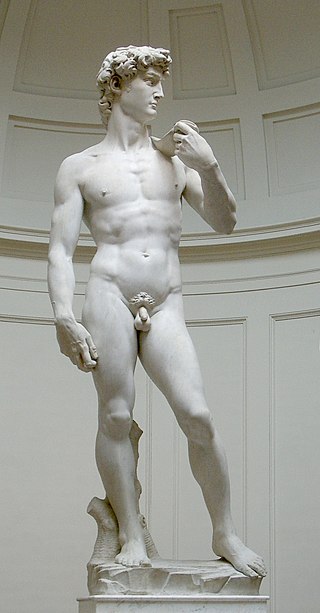
The Poetry of Michelangelo
| The Statue of David, completed by Michelangelo in 1504, is one of the most renowned works of the Renaissance. |
In writing a post about Michelangelo and his paintings for the Sistine Chapel for another blog, I came across a part of his life I had never known.Almost everyone knows his paintings on the ceiling of the Sistine Chapel and we know some of his sculpture, such as the David and Pietà. I don't think many people know about his poetry.
I think that my first real encounter with the life of Michelangelo was watching the film The Agony and the Ecstasy
I wrote a poem on my daily poem site this past week and realized later that I had used the same title and a very similar experience for an earlier poem this year. Later, I discovered an even earlier version of the idea in a notebook from 6 years ago. My aging memory and its lapses made me read more about the later years of Michelangelo's life and it was news to me that he turned to writing poetry.
His sexuality is somewhat in question but it is clearly a part of his poetry. He wrote over three hundred sonnets and madrigals.
The longest sequence were written to Tommaso dei Cavalieri. He met Tommasso when he was 57 and Tommasso was 23 years old. The Tommasso poems are the first large sequence of poems in any modern tongue addressed by one man to another. It's a bit surprising to me to realize that Shakespeare's sonnets to the "fair youth" were written only 50 years after Michelangelo's sonnets.
This led me to find a copy of The Complete Poems of Michelangelo
In a poem to Cavalieri, he writes:
Nay, things that suffer death, quench not the fireAnd Cavalieri replied in a letter
Of deathless spirits; nor eternity
Serves sordid Time, that withers all things rare.
The young nobleman was exceptionally handsome, and his appearance seems to have fit the artist's notions of ideal masculine beauty. Michelangelo described him as "light of our century, paragon of all the world."
They remained lifelong friends, and Cavalieri was present at the artist's death. Scholars still dispute whether this was a homosexual or paternal relationship.
My lover stole my heart, just over there
– so gently! – and stole much more, my life as well.
And there, all promise, first his fine eyes fell
on me, and there his turnabout meant no.
He manacled me there; there let me go;
There I bemoaned my luck; with anguished eye
watched, from this very rock, his last goodbye
as he took myself from me, bound who knows where.
His homoerotic poetry was something that later generations were uncomfortable with and it never really came into popular books and films about his life. Michelangelo's grandnephew, Michelangelo the Younger, published the poems in 1623 with the gender of pronouns changed to be feminine. The gender was restored to male in John Addington Symonds' translation into English in 1893. in 1547.
Why should I seek to ease intense desire
With still more tears and windy words of grief?
If only chains and bands can make me blest,
No marvel if alone and naked I go
An armed Cavaliere's captive and slave confessed.
"Cavaliere" or "cavalry man" is also a play on Cavalieri.
![]() |
| Michelangelo, Self-Portrait |
Michelangelo never married and it is unclear whether he had any longterm physical relationship with anyone. He did have a great love for the poet and noble widow Vittoria Colonna, whom he met in Rome in 1536 or 1538. She was in her late forties and he was in her early 60s at the time.
Colonna's poetry and her zealous religious beliefs greatly influenced Michelangelo and led to his devout interest in Church reform. Although Colonna was apparently physically unattractive, she was the subject of many of Michelangelo's love poems, and she appears to have been the only woman with whom the reclusive artist ever had a serious relationship. They wrote sonnets for each other and their friendship remained important to Michelangelo until her death. When Colonna died suddenly in 1547 at the age of fifty-seven, Michelangelo was heartbroken, and her death ended the period of his greatest love poetry.
ON THE BRINK OF DEATH
Now hath my life across a stormy sea
Like a frail bark reached that wide port where all
Are bidden, ere the final reckoning fall
Of good and evil for eternity.
Now know I well how that fond phantasy
Which made my soul the worshiper and thrall
Of earthly art, is vain; how criminal
Is that which all men seek unwillingly.
Those amorous thoughts which were so lightly dressed,
What are they when the double death is nigh?
The one I know for sure, the other dread.
Painting nor sculpture now can lull to rest
My soul that turns to His great love on high,
Whose arms to clasp us on the cross were spread.
Following a brief illness, Michelangelo died on February 18, 1564—just weeks before his 89th birthday—at his home in Rome. A nephew bore his body back to Florence, where he was revered by the public as the "father and master of all the arts," and was laid to rest at the Basilica di Santa Croce—his chosen place of burial.
Friday, 21 November 2014
Three Dimensional Poetry
In the last year, I've been revising a collection of short stories and this last month, I wrote a play. It's been like riding two horses, using the language as a poet and exploring narratives based on Minnesota's history. Several poets have written plays: William Shakespeare, Alfred Tennyson, Robert Browning, WB Yeats, Lorcas, Langston Hughes, TS Eliot, Rita Dove, and many others. So of course I have excellent role models in past and in contemporary literary circles.
John Lahr of the New Yorker interviewed Sarah Ruhl, poet turned playwright. He writes:
Ruhl began her career as a poet—her first book, Death in Another Country, a collection of verse, was published when she was twenty—and she sees her plays as “three-dimensional poems.” Ruhl’s characters occupy, she has said, “the real world and also a suspended state.” ... She wants to project the delights of pretense, “the interplay between the actual and the magical.”
Her literary volte-face was due in part to her confusion about the confessional “I” of her poetic voice, which she felt had been exhausted in mourning her father. In “Dream,” for instance, she wrote, “I wake this morning and gather a mouthful of dirt— / words—with a teaspoon, that you may speak to me again.” “I didn’t know what a poem should be anymore,” she said. “Plays provided a way to open up content and have many voices. I felt that onstage one could speak lyrically and with emotion, and that the actor was longing for that kind of speech, whereas in poetic discourse emotion was in some circles becoming embarrassing.”Poetry is the genre known for its compression, imagery, and patterned language (which also can occur in plays and other genres), but poetry is not known for its characters, plot or dialogue. It's possible to never have to grapple with these elements at all. When I began writing Night Train Red Dust, the narratives swept me along and I enjoyed the opportunity to explore other voices beside my own. The book began to feel like a fully developed world to me; it connects to landscape and community. This year, my writing explores more narratives of this place--northern Minnesota. When Night Train Red Dust was published, I felt as if I'd only begun. The poetic "I" in this book encompasses many, and I have found that writing a play provides a natural and logical step of exploring more voices.
Another poet who explores all the genres is Anne Carson. In Decreation, she brings together poetry, essays, a screenplay, an opera libretto, an oratorio ("Lots of Guns: An Oratorio for Five Voices") and a documentary written as a film's shot list. Of her original works, she told Sam Anderson of the New York Times:
We have a kind of inertia, sitting and listening. But it’s really important to get somehow into the mind and make it move somewhere it has never moved before. That happens partly because the material is mysterious or unknown but mostly because of the way you push the material around from word to word in a sentence. And it’s that that I’m more interested in doing, generally, than mystifying by having unexpected content or bizarre forms. It’s more like: Given whatever material we’re going to talk about, and we all know what it is, how can we move within it in a way we’ve never moved before, mentally? That seems like the most exciting thing to do with your head. I think it’s a weakness to fall back into merely mystifying the audience, which anybody can do.Reading Anne Carson's work is exhilarating. I feel the release of any genre-related stops. Why not use whatever works? Why not find energy in juxtaposing stories and forms of any kind? Why not think outside the box? We see this sort of playfulness in many writers, for example, Lydia Davis (fiction). With a draft of my new stories and play in hand, I now plow into this landscape to listen and develop the rhythms, characters, and plot.
I like Carson's objective of making the mind move. But it's not exactly how I would describe my own aims. Exploring change and desire, my work arises from the landscape. Mesabi means the "giant in the earth." The term has been interpreted to refer the economic power of the ore, but I think the capitalists have ignored the spiritual meaning. The earth--a spiritual power? Mainstream culture seems not to recognize such a thing, and yet people who go to the Boundary Waters or spend time along the shore of Lake Superior and its forests know what I mean. As a writer, I want to acknowledge and honor this sense of landscape.
As far as the writing, there is definitely a feeling that I've released this stream, and it keeps pouring. Maybe the poems have just gotten much bigger--and they have grown into essays and stories and drama--more three dimensional.
Echo & Lightning is a collection of ecstatic poems that trace the intersections between women and God: ascension and descent. This book is the libretto for the voice and cello composition, here.
Audio poems and cello:
Single poems:
Loveroot, Silk Thread http://www.cellodreams.com/music/loverootsilkthread.mp3
The River Falls http://www.cellodreams.com/music/river.mp3
Sequences:
Section 1:
http://www.cellodreams.com/music/fearfuljourneypodcast.mp3
Section 2:
http://www.cellodreams.com/music/undertowpodcast.mp3
Audio poems and cello:
Single poems:
Loveroot, Silk Thread http://www.cellodreams.com/music/loverootsilkthread.mp3
The River Falls http://www.cellodreams.com/music/river.mp3
Sequences:
Section 1:
http://www.cellodreams.com/music/fearfuljourneypodcast.mp3
Section 2:
http://www.cellodreams.com/music/undertowpodcast.mp3
Wednesday, 19 November 2014
On Writing and On Being A Poet
"To write well is to think clearly. That's why it's so hard." - David McCullough
"Write first and always. Painting, music, friends, cinema, all these come afterwards."- Henry Miller on writing
.
"It will come if it is there, and if you will let it come.” - Gertrude Stein
"If I had to give a young writer some advice I would say to write about something that has happened to him; it’s always easy to tell whether a writer is writing about something that has happened to him or something he has read or been told. It always amuses me that the biggest praise for my work comes for the imagination, while the truth is that there’s not a single line in all my work that does not have a basis in reality. The problem is that Caribbean reality resembles the wildest imagination." - Gabriel García Márquez
"Ars Poetica" is Archibald MacLeish's 1926 poem that references Horace's treatise by that name (translated as "Art of Poetry"), which was written in the first century A.D. Horace's intent was to write a how-to on writing poetry. MacLeish's poem begins:
A poem should be palpable and mute
As a globed fruit,
Dumb
As old medallions to the thumb,
Silent as the sleeve-worn stone
Of casement ledges where the moss has grown—
A poem should be wordless
As the flight of birds.
Monday, 17 November 2014
Outpost, by Lindsay Pope
March, 1941.
The coast is a scribble. Stars are stored in a
wooden box on my shelf. It is more black than
white here. Like algebra but colder.
The hut’s walls are a ghetto of mice. Those I
catch become whiskers of smoke in the firebox.
I attend to the scratching radio.
This is not my dream.
July, 1942.
The short days are long here. Morse code
stutters in my aerial.
Every door of the home
Sunday, 16 November 2014
Forgiveness Forgiveness by Shane McCrae
Shane McCrae
Forgiveness Forgiveness
Factory Hollow Press, 2014
http://www.factoryhollowpress.com
ISBN: 978-0-9835203-1-3
Shane McCrae's third full-length book of poetry, Forgiveness Forgiveness, is a powerful, haunting work that deals with issues of identity, race, family, abuse, belonging, and finding a way to move forward. The poems are mostly unpunctuated, often ungrammatical. Ideas burst forth and crash into each other, as if the speaker is recollecting things for the first time and hasn't had time to filter these thoughts through the conventions of syntax. The effect, in McCrae's hands, is masterful. Although McCrae has made use of similar techniques in previous books, Forgiveness Forgiveness feels even more authentic, personal, and emotionally raw.
Forgiveness Forgiveness is structured in two halves separated by “A Pastoral Interlude.” Each half contains three sections, “The Visible Boy,” “Materials Sketch,” and “Draft Epilogue,” with the second half of the book providing alternate versions of the first three sections.
The first half introduces Little Brown Koko, a quasi-allegorical figure pulled from a racist children's book the speaker found in his grandparent's home as a child. Koko walks barefoot, steals watermelons, strolls along picket fences, and gets beaten by his mother's wooden spoon. He is essentially a puppet, a stereotype, a black character who is thrust into the imaginary world and manipulated by a white author and a white illustrator. The voice of Koko and the other black characters in the book are not authentic voices but instead racist fabrications:
Forgiveness Forgiveness
Factory Hollow Press, 2014
http://www.factoryhollowpress.com
ISBN: 978-0-9835203-1-3
Reviewed by Joel W. Nelson.
Shane McCrae was hired to teach for the Spalding University brief-residency MFA program as I was completing my final semester in 2013. During my graduating residency, I was fortunate enough to be a part of a workshop he led along with Greg Pape. McCrae came across as humble, often self-deprecating, guy who is smart, talented, hard working, and an all-around cool guy. To date, McCrae has released three full-length books of poetry: Mule, Blood, and Forgiveness Forgiveness. His fourth book, The Animal Too Big to Kill, is forthcoming from Persea Books. McCrae is a graduate of Harvard Law School and the Iowa University Writers' Workshop. In addition to teaching at Spalding University, he is an assistant professor in the Creative Writing program at Oberlin College.
____________________________________
Review of Forgiveness Forgiveness
Forgiveness Forgivenesscomes at a time when race relations are tense. The case of Michael Brown still looms large in the news, even as the stories of Eric Garner, John Crawford III, and countless others begin to fade. A society assumed by some to be post-racial is proving to be anything but. There are still two Americas. We are still divided, still struggling. We claim to be equals on the one hand, while equality is denied on the other. The narrative is still one-sided, but it is very much in flux.
* * *
My grandfather liked to paint pictures
of Native Americans discovering water
as if water hadn't existed before a white
man painted it, wearing expressions of
uncomprehending awe, crouching to
touch the river.
-“How My Grandfather Painted Water”
Shane McCrae's third full-length book of poetry, Forgiveness Forgiveness, is a powerful, haunting work that deals with issues of identity, race, family, abuse, belonging, and finding a way to move forward. The poems are mostly unpunctuated, often ungrammatical. Ideas burst forth and crash into each other, as if the speaker is recollecting things for the first time and hasn't had time to filter these thoughts through the conventions of syntax. The effect, in McCrae's hands, is masterful. Although McCrae has made use of similar techniques in previous books, Forgiveness Forgiveness feels even more authentic, personal, and emotionally raw.
Forgiveness Forgiveness is structured in two halves separated by “A Pastoral Interlude.” Each half contains three sections, “The Visible Boy,” “Materials Sketch,” and “Draft Epilogue,” with the second half of the book providing alternate versions of the first three sections.
The first half introduces Little Brown Koko, a quasi-allegorical figure pulled from a racist children's book the speaker found in his grandparent's home as a child. Koko walks barefoot, steals watermelons, strolls along picket fences, and gets beaten by his mother's wooden spoon. He is essentially a puppet, a stereotype, a black character who is thrust into the imaginary world and manipulated by a white author and a white illustrator. The voice of Koko and the other black characters in the book are not authentic voices but instead racist fabrications:
in the book as I remember it
The illustrator indicates the motion / With action lines
Parentheses surround the rolling pin
Parentheses surround
Little Brown Koko running from the house
The black of the parentheses
Is different from the black of his brown skin
The two blacks tell the reader
everything the reader needs to know about him
Like two-way mirrors
- “6. The Two Blacks” from “The Visible Boy”
The second half of the book turns its focus to the speaker, a man separated from his black father and white mother and raised by racist grandparents. The grandparents are incapable of acknowledging the speaker's father and attempt to twist family history to further alienate him and minimize the speaker's blackness, if not erase it completely:
While the two halves of Forgiveness Forgiveness interact and inform each other, they are not mirror images. The parallels between Little Brown Koko and the speaker are more metaphorical than literal and are understood to speak to--but not necessarily for--a broader community. The poems in the second half of the book are more personal, perhaps even confessional. The early Koko poems are lighter in tone and gradually become darker and more grotesque as the racism becomes more overt and violent. The progression of the second half of the book is generally the opposite. Koko is left ravaged, but the speaker's story is accented by hope.
[…] I couldn't remember my fatherIn addition to being a racist, the grandfather becomes sexually and physically abusive. The resulting confusion and dissonance caused by this troubling home environment prove to be fertile ground for McCrae's poetry, made even more compelling when considering the dynamic between the speaker's story and that of Little Brown Koko.
anyway, because I was three when
my grandparents took me from him
and they never told me that, anyway,
they told me he had abandoned me
- “How My Grandfather Painted Water”
While the two halves of Forgiveness Forgiveness interact and inform each other, they are not mirror images. The parallels between Little Brown Koko and the speaker are more metaphorical than literal and are understood to speak to--but not necessarily for--a broader community. The poems in the second half of the book are more personal, perhaps even confessional. The early Koko poems are lighter in tone and gradually become darker and more grotesque as the racism becomes more overt and violent. The progression of the second half of the book is generally the opposite. Koko is left ravaged, but the speaker's story is accented by hope.
Although a title like Forgiveness Forgiveness might imply a tidy conclusion, the end of the book brings little resolution, at least not of the feel-good type. The speaker moves on with his life. He has a wife and a family of his own, but he never fully makes amends with either of his grandparents. Perhaps such amends are impossible. The final poem in the collection, “Forgiveness Forgiveness,” serves as a suitable but devastating capstone for a truly compelling book of poems.
* * *
Perhaps caricatures like Little Brown Koko are no longer acceptable in contemporary society--people today prefer news stories, select personal anecdotes, and misleading statistics--yet still, people are stereotyped and placed in a race narrative. Their voices are replaced with another voice, a voice often imposed on them by people who look a lot like me. Forgiveness Forgiveness is a powerful book of poems, not only because of its deep and personal nature or because of McCrae's unique presentation, but because the work speaks to contemporary America. Voices like McCrae's are important. He not only has something to say, but he says it while maintaining artistic integrity with poems of a very high caliber.
____________________________________
Joel W. Nelson spent most of his childhood in the sub-Saharan countries of Burkina Faso and Cote d'Ivoire. He has an MFA in Poetry from Spalding University and lives with his wife and son in Louisville, KY. His poems may be found in the Bellevue Literary Review, the Found Poetry Review, The Louisville Review, and A Narrow Fellow.
Follow @JoelWNelson Tweet
Friday, 14 November 2014
Oh Hey There, Jared
So, you have these new ads. Apparently, you hope that the trend of charm bracelets will sweep the nation this holiday season. Women will bond, in the language that all women share: jewelry. Men will be lauded for their savvy gift-giving.
Because a bracelet can communicate critical facts, such as the following….
"The ballet slippers?" "I used to dance."
"Suitcase?" "Anniversary trip."
"Soccer ball?" "Soccer Mom."
Or this one, in which the token professional accolade (She's the boss!) is quickly set aside. Do we find out that she oversaw a merger? That she has a law degree from Haravard? That she holds a revolutionary engineering patent? Nope.
"She's been to London, Paris, and her son plays baseball."
Each time with the tag line...Telling her life story with just a turn of the wrist.
Oh, Jared. Your new ads are horrible. We're not even going to get into "the red-hot love bead." (Though if you are prepared to offer a cast pewter clitoris, let's talk.)
How kind of you to innovate a way for us to express ourselves. But luckily, we came up with a few alternative options, such as: Poems. Essays. Whole memoirs, even. Do you want to see what it looks like when a woman really tells a life story? Read this...
"Breasts Like Martinis" - Jill McDonough (Slate)
or this:
"Till Death Did They Part" - Molly Krause (Brain, Child Magazine)
or this:
"Piece of Her" - Monica F. Jacobe (Barely South Review)
Here's the thing, Jared: the truth doesn't jingle neatly. A woman's story doesn't consist of sequential beads on a string; it doesn't consist solely of activities pursued on behalf of her children, or in the company of her husband. We love, we sacrifice, we regret, we wonder, we hope, but none of it is linear. This is what it means to live a life.
You know what Pandora was doing, when she turned her wrist?
She was lifting the lid off the box.
Wednesday, 12 November 2014
Print Journals That Accept Online Submissions 11/14
It's been more than a year since I last updated the list of print journals that accept online submissions. This list includes 14 additions. You'll notice that a number of the journals charge a fee for the online submission. Many submitters feel that a small fee is worth it as it saves paper, stamps, and a trip to the post office.
Journals new to the list (not necessarily new journals) are indicated with a double asterisk.
The number of issues per year appears after the journal's name.
The reading period for each journal appears at the end of each entry.
Unless noted otherwise, the journal accepts simultaneous submissions.
As always, please let me know if you find any errors here. And good luck.
Adanna: a journal about women, for women—1x
Jan 31 - April 30
Agni—2x
Sept 1 - May 31
February 1 - May 31
all year
June 1 - November 1
Barrelhouse—2x
check website to see if open for poetry submissions
June 1 - November 15
Bateau—2x
all year
Sept 15-Dec 15
all year
no sim
all year
Sept 15 - May 15
Boulevard—3x
November 1-April 30
Breakwater Review—2x
November 15 for the January issue;
April 15 for the June issue
Burnside Review—every 9 months
$3 fee / pays contributors
Caesura—2x
August 5 - Oct. 5
Caketrain—1x
all year
Columbia—2x
August 15-October 15
Crazyhorse—2x
all year
$2 fee
$2 fee
August 1 to November 1
December 1 to April 1
CutBank—1-2x
October 1 thru February 15
Ecotone—2x
August 15–April 15
$3 fee
all year
Fence—2x
check website to see if open for submissions
(must submit poems one by one)
FIELD—2x
all year
no sim
no Jan, Feb, June, or July
August thru May
$3 fee
Fourteen Hills—2x
September 1 to January 1
March 1 to July 1
**The Fourth River—1x
July 1-Sept 1
**The Frank Martin Review—1x
all year
Gargoyle—1x
reads month of June
September 15 deadline for the Spring issue
February 15 deadline for the Fall issue
Grist—1x
August 15 - April 15
All year
deadlines: Winter issue: November 15
Sept 1 - May 31
Aug 1 - Oct 1
All year
pays
Sept 1 - Dec. 15
all year
rolling for 3-4 weeks at a time
check website for dates
Jubilat—2x
September 1 - May 1
September 15 - January 15
no sim
check website for submission dates
The Laurel Review—1x
$2 fee
Sept 1-May 1
**The Lindenwood Review—1x
Jul 15-Dec 15
The Laurel Review—1x
$2 fee
Sept 1-May 1
**The Lindenwood Review—1x
Jul 15-Dec 15
Submit to Poetry Editor: lareview.poetry@gmail.com
Sept 1 - Dec 1
all year
Lumina—1x
August 1 - Nov 15
October 1 - April 30
Measure—2x
no sim
all year
The Mom Egg—1x
July 15 - Sept. 30
Meridian—2x ($2 fee)
all year
all year
August 1–November 1
January 1–April 1
December, January, and February only or all year if a subscriber
August 1-May 1
$3 fee
for the Summer issue January 1 through March 1
for the Winter issue July 1 through September 1 (contest only)
no sim
Sept 1-May 31
New Madrid—2x
August 15 - November 1
Sept-May (summer okay for subscribers)
Aug 15 - May 1
New South—2x
all year
weekly magazine
all year
Ninth Letter—2x
September 1 - April 30
September 1-December 1
January 15-April 15
Pleiades—2x
August 15-May 15
Ploughshares—3x
Poetry—11x
year round
no sim
September 15 - April 15
February 1 to April 1 for the winter issue
June 1 to August 1 for the spring issue
Sept 1-May 1
all year
considers previously published
All year
Rattle—2x
year round
Redactions—1x
year round
Redivider—2x
all year
No June, July, August, or December
no sim
Rhino—1x
April 1 - Oct 1
Sept. 15 through Jan. 15
Rosebud—3x
All year
Salt Hill—2x
August 1 - April 1
Jan 1 - Feb 1 / July 1-Aug 1
Saw Palm—1x
July 1- October 1
Feb. 1 - April 1
January 1 - March 1
January 1 - March 1
All year
All year
So to Speak—2x
August 15-October 15 for the Spring issue
January 1-March 15 for the Fall issue
All year
No June, July, August
$2 fee
Sou’wester—2x
August 15 - May 15
Sept 15 - May 15
Sept 1-Dec 15
Subtropics—3x
September 1 - April 15
No Sim
No Sim
All year
Tampa Review—2x
Sept 1 - Dec. 31
no sim
via email
Sept 15 - Nov. 1
no sim
Sept 15 - April 30
32 poems—2x
via email
all year
Jan 1 - June 30
Tiferet—1x
Sept - December
September 1 - May 31
Upstreet—1x
Sept 1 - March 1
Versal—1x
Sept 15 - Jan 15
All year
August 1 - Oct 15
Dec 15 – Feb 1
April 15 - July 31
West Branch—2x
Aug 15 - April 15
all year
all year
Yemassee—2x
All year
Taylor Swift Or T. S. Eliot?
Let us go then, you and I / knew you were trouble when you walked in.
A friend sent me a link to one of those online quizzes. "It's about poetry," she said, "I figured you'd like it."
It is called "Who Said It: Taylor Swift Or T. S. Eliot?"
Yes, it gives you a line and you have to identify the author - T.S. or the other T.S.
Pretty easy, right? I mean T.S. Eliot
You'd be surprised how tricky the quiz can be.
The first three lines in the quiz are:
"I am glad you have a cat."
"Hold tight, hold tight."
"You are the music, while the music lasts."
We know Eliot had his cat poems
Do you dare to try?
Go to http://www.buzzfeed.com/jenniferschaffer/who-said-it-taylor-swift-or-t-s-eliot
Subscribe to:
Posts (Atom)